
Yes. In some situations, South Carolina police may arrest you for DUI even when no officer personally saw your vehicle moving. The lack of direct observation does not automatically prevent an arrest or require a DUI charge to be dismissed.
When an officer did not witness the driving, the circumstances surrounding the arrest matter. South Carolina courts have recognized that an officer may make a warrantless arrest for a suspected freshly committed offense when the facts and circumstances provide probable cause to believe the offense occurred.
A conviction requires more than probable cause. The State must prove the required elements of DUI beyond a reasonable doubt, including that you drove a motor vehicle while your ability to drive was materially and appreciably impaired by alcohol, drugs, or a combination of substances.
The Bateman Law Firm represents people facing DUI allegations in Greenville, Clemson, Spartanburg, and nearby areas of Upstate South Carolina, including cases where no officer personally witnessed the driving.


350+ Reviews
5.0 Star Average






Can Police Arrest You for DUI Without Watching You Drive?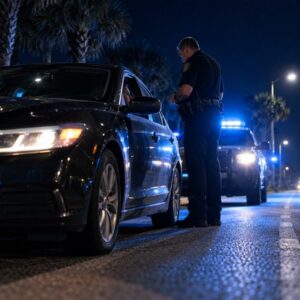
Yes. An officer does not always have to personally see a vehicle moving before making a DUI arrest in South Carolina.
This issue often arises when officers:
- Arrive after a crash
- Respond to a 911 call after a vehicle has stopped
- Find someone in or near a parked vehicle
- Locate a suspected driver after the person has left the vehicle
- Receive prompt information from a witness identifying the driver
South Carolina law generally limits warrantless misdemeanor arrests when the offense did not occur in an officer’s presence. South Carolina courts have also recognized an exception involving a suspected freshly committed crime when the facts and circumstances provide probable cause for the arrest.
In State v. Martin, the South Carolina Supreme Court addressed a DUI arrest after an officer arrived at an accident scene and did not personally see the defendant driving. The court concluded that the arrest could be lawful when the observed facts and circumstances gave the officer probable cause to believe that a DUI had been freshly committed.
Later South Carolina cases have applied the same principle when officers developed probable cause from information and circumstances discovered shortly after an alleged DUI.
The exact facts can be critical. The amount of time that passed, the source of the information, the condition and location of the vehicle, statements made at the scene, and other evidence may affect whether probable cause existed.




Probable Cause Is Not the Same as Proof Beyond a Reasonable Doubt
An arrest and a conviction involve different legal standards.
Probable cause concerns whether the known facts and circumstances provide a reasonable basis to believe that an offense occurred and that the person arrested committed it.
A criminal conviction requires proof beyond a reasonable doubt.
This difference can be especially significant when no officer saw you drive. An officer may believe there is enough evidence to make an arrest, while the prosecution may later face disputes about who drove, when the driving occurred, and whether the alleged impairment existed at the time of driving.
South Carolina DUI Law Still Requires Proof That You Drove
South Carolina DUI law prohibits driving a motor vehicle while alcohol, drugs, or a combination of substances materially and appreciably impair a person’s ability to drive.
The requirement that the State prove driving matters when officers arrive after the vehicle has stopped.
Sitting in a vehicle does not automatically establish that you drove it while impaired. Standing beside a vehicle does not automatically establish driving. Possessing the keys also does not automatically establish that you drove while impaired.
The prosecution may try to prove driving through direct or circumstantial evidence.
You can read more about the underlying South Carolina DUI offense here:
https://duigreenville.com/drunk-driving-laws-south-carolina/
"He has an innate ability to convey to clients what really matters in their cases."
"John Bateman is my absolute go to peer in the legal field when it comes to questions about DUI. . . . He has an innate ability to convey to clients what really matters in their cases. As a fellow attorney, I highly recommend John to anyone in the SC or NC areas who are looking for... legal representation when facing a DUI charge."
M. Brock

"An excellent DUI attorney. He has received the same field sobriety test training as all police officers in the State"
"John is an excellent DUI attorney. He has received the same field sobriety test training as all police officers in the State, and also the same training as the people who are the instructors of the police officer training courses on field sobriety tests. He is very passionate about DUI's and I recommend him often to people who are facing serious charges in the upstate area."
P. Hammond
"He cares for each of his clients and works extremely hard to achieve results."
"Very knowledgeable and thorough in his preparation and representation of his clients. He cares for each of his clients and works extremely hard to achieve results. I highly recommend this lawyer."
C. Grubbs
What Evidence Can Police Use If They Did Not See You Drive?
A DUI case can be built from several types of evidence. No single fact automatically proves that you drove while impaired.
Police and prosecutors may consider:
- A witness who says you were driving
- Surveillance footage from a home, business, parking lot, or traffic camera
- Evidence from a recent collision
- The location and condition of the vehicle
- Fresh vehicle damage, debris, tire marks, or other physical evidence
- Statements about who was driving
- Statements about where you came from or when you arrived
- Receipts, phone records, messages, or location information that may help establish a timeline
- Whether the engine was running
- The location of the keys
- The position of the transmission
- Police body camera or dash camera footage
- Field sobriety test observations
- Breath, blood, or urine test results
The key questions are whether the evidence connects you to actual driving and whether any alleged impairment can be connected to the time when that driving occurred.
A DUI Arrest Without Witnessed Driving Often Depends on the Timeline
The timeline can become one of the most significant issues in a case where police did not see the vehicle moving.
Questions may include:
- When was the vehicle last driven?
- Who was driving?
- When did the vehicle arrive at its location?
- How long had the vehicle been stopped before police arrived?
- When was alcohol or another substance consumed?
- When did any alleged signs of impairment appear?
- When was a chemical test administered?
- What did witnesses actually see, and when did they see it?
A delay between the alleged driving and the officer’s arrival may create factual questions that require close review.
For example, a person may have consumed alcohol after reaching a destination. A witness may be mistaken about who was driving. A vehicle may have been parked for a significant period before officers arrived. Surveillance footage may establish a different timeline from the one described in a police report.
Callout: When No Officer Saw the Vehicle Move, the Timeline and Evidence Connecting You to the Driving Can Become Central Issues in the Case.
A Parked Car Does Not Automatically Prove DUI
A parked-car investigation is a common example of a DUI case in which an officer may investigate or make an arrest without personally seeing the vehicle move.
Imagine that an officer finds you sitting in the driver’s seat of a parked vehicle in Greenville. The engine is running, and the officer observes circumstances that lead to a DUI investigation.
Those facts may support further investigation, but they do not automatically answer every issue that the State would have to prove at trial.
Questions may include:
- Who drove the vehicle to that location?
- When did the vehicle arrive?
- How long had it been parked?
- Were you in the driver’s seat while the vehicle was moving?
- When was alcohol, medication, or another substance consumed?
- Were you materially and appreciably impaired while driving?
Similar questions can arise in a parking lot in Clemson, outside an apartment complex in Spartanburg, or near a residence elsewhere in Upstate South Carolina.
What You Say at the Scene Can Become Evidence
Statements can play a major role when nobody in law enforcement witnessed the driving.
An officer may ask:
- Were you driving?
- Where are you coming from?
- How long have you been here?
- When did you last drink?
- Who owns the vehicle?
- Who else was in the vehicle?
Your answers may be used to identify you as the driver or to establish a timeline.
A statement is not always conclusive by itself. The wording of the question, the surrounding circumstances, body camera footage, witness accounts, and physical evidence can all affect how a statement is evaluated.
You can learn more about roadside DUI encounters here:
https://duigreenville.com/what-happens-when-the-police-stop-you-for-dui/
Why Video Evidence Can Matter
Video can be especially significant when an officer did not personally witness the driving.
A surveillance camera may show:
- Who entered the driver’s seat
- When the vehicle arrived
- How long the vehicle remained stationary
- Whether another person exited the driver’s side
- Events before police arrived
Police body camera footage may also preserve what you said, what witnesses said, what the officer observed, and how the investigation developed.
South Carolina has specific statutory requirements involving video recording in many DUI investigations. Whether a recording complies with those requirements can depend on the circumstances and any applicable statutory exceptions.
More information about South Carolina DUI video requirements is available here:
https://duigreenville.com/dui-videotaping-laws-south-carolina/
Can Circumstantial Evidence Be Enough for a DUI Conviction?
Circumstantial evidence can be used in a South Carolina criminal case. The absence of an officer who personally watched you drive does not automatically require dismissal of a DUI charge.
The question at trial is whether the evidence proves every required element beyond a reasonable doubt.
A prosecutor may rely on several facts together, such as:
- Witness identification
- Vehicle damage
- Your location near the vehicle
- Statements about driving
- Video footage
- The time between the alleged driving and police contact
- Observations of impairment
- Chemical test evidence
A defense attorney may examine weaknesses in the timeline, the identification of the driver, witness reliability, assumptions about the vehicle, statements attributed to you, and whether the evidence actually establishes impairment at the time of driving.
What South Carolina Cases Say About DUI Arrests Without Direct Observation
South Carolina appellate decisions have addressed arrests in which law enforcement did not personally observe the alleged driving.
In State v. Martin, an officer arrived after a reported accident. The officer observed damaged vehicles, received information identifying the drivers, observed signs of intoxication, and heard an admission concerning who had been driving. The South Carolina Supreme Court held that the circumstances could support a warrantless arrest for a freshly committed DUI even though the officer did not personally observe the vehicle moving.
In Fradella v. Town of Mount Pleasant, the South Carolina Court of Appeals applied the same general principle in circumstances where officers encountered the suspected driver after the crash scene. The court focused on whether the facts and circumstances known to the officers supported probable cause to believe that the DUI had been freshly committed.
These cases do not mean that every DUI arrest without direct observation is lawful. The legality and strength of a case depend on the specific facts.
The Arrest Standard and Trial Standard Are Different
People sometimes assume that an arrest means the police already have enough evidence for a conviction. That is not necessarily the case.
When no officer saw you drive, a case may involve questions such as:
- Is there reliable evidence that the vehicle moved?
- Is there reliable evidence identifying you as the driver?
- When did the alleged driving occur?
- How much time passed before police arrived?
- When did alcohol or drug use occur?
- What did each witness actually observe?
- Does video confirm or contradict the reported timeline?
- Do chemical test results establish impairment at the relevant time?
- Were statements accurately recorded and interpreted?
- Did the officer have probable cause to believe a DUI had been freshly committed?
These questions may affect both challenges to the arrest and the strength of the prosecution’s evidence at trial.
What Should You Do After This Type of DUI Arrest?
If you were arrested after police arrived once the vehicle had already stopped, preserving evidence can matter.
Consider taking these steps:
- Write down a detailed timeline while the events are still fresh in your memory.
- Keep receipts, rideshare records, photographs, text messages, and other records connected to where you were and when.
- Keep every document given to you by police, the jail, the court, or the Department of Motor Vehicles.
- Identify anyone who saw who was driving or when the vehicle arrived.
- Note nearby homes, businesses, parking lots, or buildings with surveillance cameras.
- Avoid posting details about the incident on social media.
Surveillance recordings can be overwritten, so identifying potential video sources early may be useful.
A DUI defense lawyer can review the police report, body camera footage, witness statements, chemical testing, vehicle evidence, and information about who was driving.
The Bateman Law Firm’s DUI defense information is available here:
https://duigreenville.com/greenville-dui-defense-attorney/
Talk With The Bateman Law Firm About a DUI Arrest
If police arrested you for DUI even though no officer saw you drive, the case may depend on the timeline, witness accounts, statements, video evidence, physical evidence, and the facts officers relied on when making the arrest.
The Bateman Law Firm can review the circumstances, explain what the State must prove, and help you understand the legal issues raised by the evidence.
The firm represents clients in Greenville, Clemson, Spartanburg, and nearby Upstate South Carolina communities.
Request a consultation with The Bateman Law Firm online:
https://duigreenville.com/contact/
This article is for informational purposes only and is not legal advice. Consult an attorney about your specific situation.