
Summary
Yes, police can investigate and charge you with DUI after finding you asleep in a parked car in South Carolina. Sleeping in a vehicle does not automatically prove DUI.
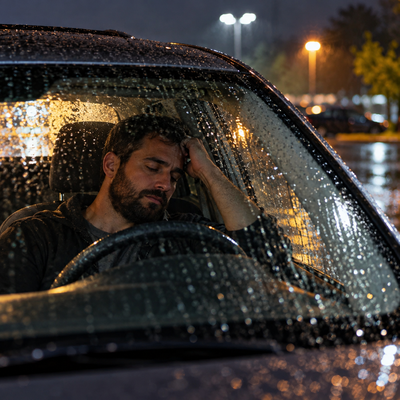
South Carolina Code Section 56-5-2930 makes it unlawful to drive a motor vehicle in South Carolina while alcohol, drugs, or a combination of substances materially and appreciably impair your faculties to drive. South Carolina courts have also held that, for this DUI statute, “drive” requires the vehicle to be in motion. The State may prove that movement through direct or circumstantial evidence.
In a sleeping-car DUI case, the questions often include:
- Did the vehicle move?
- Were you the person who drove it?
- When did you drive?
- Were you impaired at the time you drove?
- What evidence connects your condition when police arrived to the earlier driving?
The Bateman Law Firm represents people facing DUI allegations in Greenville, Clemson, Spartanburg, and nearby Upstate South Carolina communities. A sleeping-car case can turn on the timeline, vehicle location, witness statements, police video, chemical testing, receipts, phone records, and other evidence showing who drove and when.


350+ Reviews
5.0 Star Average






Does Sleeping in Your Car Automatically Count as DUI in South Carolina?
No. Being asleep in the driver’s seat does not automatically establish that you committed DUI.
South Carolina DUI law focuses on driving. Under South Carolina Code Section 56-5-2930, the State must prove that you drove a motor vehicle while your faculties to drive were materially and appreciably impaired by alcohol, drugs, or a combination of substances.
The South Carolina Supreme Court addressed the meaning of “drive” in State v. Graves. The court held that, under Section 56-5-2930, driving requires the vehicle to be in motion. The court also explained that the State may prove movement through direct or circumstantial evidence.
An officer does not need to personally watch your vehicle move for the State to pursue a DUI charge. The prosecution may rely on surrounding facts to argue that you drove before the officer arrived.
That distinction can become central when police find you asleep in a parked vehicle.
Learn more about South Carolina DUI defenses:
https://duigreenville.com/defenses-to-a-dui-charge/




Why Police May Investigate You While You Are Sleeping
A sleeping person can draw police attention when a vehicle is stopped somewhere unusual or appears connected to a recent driving event.
An officer may encounter someone sleeping in situations such as:
- A car parked on the shoulder of a highway
- A vehicle stopped in a travel lane
- A car outside a closed business
- A vehicle parked in an unusual location late at night
- A car with the engine running for an extended period
- A vehicle with signs of a recent collision
The first contact may begin as a welfare or safety check. The encounter may develop into a DUI investigation if the officer observes facts associated with alcohol or drug use.
Police may document observations such as:
- The odor of alcohol
- Open containers
- Speech patterns
- Confusion
- Eye appearance
- Balance or coordination
- Where you are seated
- Where the keys are located
- Whether the engine is running
- Whether the vehicle appears to have been driven recently
Those observations do not answer the driving question by themselves. The State still must connect the evidence to the required elements of the charged offense.
"He has an innate ability to convey to clients what really matters in their cases."
"John Bateman is my absolute go to peer in the legal field when it comes to questions about DUI. . . . He has an innate ability to convey to clients what really matters in their cases. As a fellow attorney, I highly recommend John to anyone in the SC or NC areas who are looking for... legal representation when facing a DUI charge."
M. Brock

"An excellent DUI attorney. He has received the same field sobriety test training as all police officers in the State"
"John is an excellent DUI attorney. He has received the same field sobriety test training as all police officers in the State, and also the same training as the people who are the instructors of the police officer training courses on field sobriety tests. He is very passionate about DUI's and I recommend him often to people who are facing serious charges in the upstate area."
P. Hammond
"He cares for each of his clients and works extremely hard to achieve results."
"Very knowledgeable and thorough in his preparation and representation of his clients. He cares for each of his clients and works extremely hard to achieve results. I highly recommend this lawyer."
C. Grubbs
What If the Engine Was Running?
A running engine can become part of the evidence, but it does not automatically prove that you drove while impaired.
There are reasons a person may sit or sleep in a parked vehicle with the engine running. You may have started the car for heat, air conditioning, or to charge a phone. Another person may also have driven the vehicle before you entered it.
The prosecution may look for evidence connecting the condition of the vehicle when police arrived to earlier movement.
Examples may include:
- A statement that you had been driving
- Witnesses who saw the vehicle arrive
- Surveillance footage
- Traffic-camera footage
- Fresh collision damage
- The vehicle’s location
- Engine temperature
- GPS or phone location information
- Receipts showing where you were earlier
- Statements from passengers or other drivers
No single fact automatically determines the outcome. The evidence should be reviewed as a whole.
Related Videos
Refusing Field Sobriety Tests
Choosing a DUI Attorney
Can You Be Charged If the Officer Never Saw You Drive?
Yes.
South Carolina law does not require the arresting officer to personally observe the vehicle moving before the State can attempt to prove DUI. Movement may be established through circumstantial evidence.
Circumstantial evidence allows a judge or jury to draw reasonable conclusions from surrounding facts.
Consider two examples.
In the first, police find a person asleep behind the wheel on the shoulder of I-85. The engine is running, the vehicle has fresh damage, no passengers are present, and the person tells the officer that the person pulled over minutes earlier. The prosecution may use those facts to argue that the person recently drove the vehicle.
In the second, police find a person asleep in a legally parked vehicle outside a residence. The engine is off, the car has been parked for hours, another person says that person drove the vehicle there, and no witness saw the sleeping person drive.
Those cases present very different evidence about movement, identity, timing, and impairment.
Read more about DUI cases in which police never saw the car move:
https://duigreenville.com/south-carolina-dui-police-never-saw-car-move/
If you have already been arrested, review what can happen after a DUI arrest:
https://duigreenville.com/after-dui-arrest-in-greenville-sc/
Does It Matter Where the Car Was Parked?
Yes. The vehicle’s location can affect both the investigation and the available evidence.
A car found in a marked parking space in Greenville may create different factual questions from a vehicle stopped partly in a roadway in Spartanburg or on the shoulder of a highway near Clemson.
Location may also determine what evidence is available.
For example:
- A business parking lot may have surveillance cameras.
- A residence may have doorbell or security cameras.
- A highway location may involve emergency calls, witnesses, traffic footage, or patrol-car video.
- A hotel may have parking records or surveillance footage.
- A parking garage may have entry records, payment records, or cameras.
The location can help establish when the vehicle arrived, how long it remained there, whether anyone saw it move, and who may have been driving.
What About Breath, Blood, or Urine Testing?
Chemical testing may become part of a sleeping-car DUI case, but a test result does not answer every issue.
South Carolina’s implied-consent law provides for chemical testing in qualifying DUI arrests. Depending on the circumstances and the suspected substance, breath, blood, or urine evidence may become part of the case.
A refusal or certain alcohol-concentration results can also create driver’s license consequences that are separate from the criminal DUI charge.
In a sleeping-car case, chemical evidence may raise an additional timing question. A test can provide evidence about alcohol or drugs, but the State still must prove the required connection between impairment and the time you drove.
That can be especially significant when there is a long period between the alleged driving and police contact.
Learn more about South Carolina implied-consent law:
https://duigreenville.com/implied-consent-greenville-sc/
What Evidence Can Help in a Sleeping-Car DUI Case?
Evidence can disappear quickly. Surveillance systems may overwrite video, witnesses may become difficult to locate, and digital information may become harder to recover.
Preserving the timeline can be especially valuable in a case where police did not observe the driving.
Potential evidence may include:
- Tow records
- Parking receipts
- Restaurant or bar receipts
- Hotel records
- Text messages
- Call logs
- Rideshare records
- Phone location history
- Photographs of the parking area
- Witness names and contact information
- Surveillance footage
- Doorbell-camera footage
- Traffic-camera footage
- Dash-camera footage
- Body-camera footage
- GPS or vehicle-location data
- Information showing that another person drove the vehicle
Write down what you remember while the details remain fresh.
Record:
- When you last drove
- Where you parked
- When you began drinking or using any substance
- Who had the keys
- Whether the engine was running
- Who else was present
- Who last drove the vehicle
- What you told the officer
- What the officer asked you
- Whether nearby homes or businesses had cameras
Do not assume that video or electronic records will remain available indefinitely.
What If You Started Drinking After You Parked?
The timing of alcohol consumption can become a central issue.
The State must prove impairment in connection with the time you drove. If you drove to a location while sober, parked, and consumed alcohol only after the vehicle was already stationary, the timeline may be highly relevant.
For example, suppose you drove to a location, legally parked, and then drank alcohol while remaining there. Police arrive later and find you asleep in the vehicle. The prosecution may investigate the case, but evidence of your condition when police arrived does not automatically establish that you were impaired when you drove earlier.
Evidence that may help establish the sequence of events includes:
- Receipts with timestamps
- Witness statements
- Text messages
- Phone records
- Surveillance footage
- Rideshare records
- Photographs or videos
- Phone location data
- Parking records
The closer the evidence can place specific events on a reliable timeline, the easier it becomes to evaluate what the State can and cannot prove.
What If Someone Else Drove the Car?
The identity of the driver can also be disputed.
Being found in the driver’s seat does not necessarily prove that you were the person who drove the vehicle to that location.
Another person may have driven before leaving. You may have moved into the driver’s seat later to sleep, use the heater or air conditioning, charge a device, or wait for transportation.
Evidence that may help identify the driver includes:
- Passenger or witness statements
- Surveillance footage
- Doorbell-camera footage
- Text messages
- Rideshare records
- Phone location records
- Vehicle GPS information
- Receipts
- Statements made to police
- Video showing when people entered or exited the vehicle
A defense lawyer can compare those records with the officer’s report and video to determine whether the State has reliable evidence identifying you as the driver.
Can Statements to Police Affect the Case?
Yes. Statements can become significant evidence in a DUI case.
An officer may ask questions such as:
- Where were you coming from?
- When did you arrive?
- Were you driving?
- When did you last drink?
- How much did you drink?
- Why did you pull over?
- Who else was in the vehicle?
- Who owns the car?
- Where are the keys?
The prosecution may use recorded or reported answers to build a timeline.
Body-camera, dash-camera, dispatch, and other recordings may help determine exactly what was asked and what you said. They can also show whether a written police report accurately reflects the encounter.
What Should You Do After a Sleeping-Car DUI Arrest?
A DUI arrest is the beginning of a legal case, not a determination of guilt.
After an arrest:
- Keep every citation, bond document, test result, notice, and court paper.
- Write down a detailed timeline while you still remember the events clearly.
- Preserve receipts, text messages, call logs, photographs, videos, rideshare records, and location data.
- Identify anyone who saw who drove the vehicle or when it arrived.
- Note nearby homes, businesses, parking lots, or traffic cameras.
- Avoid deleting information that may be relevant.
- Avoid posting details about the case on social media.
- Pay attention to any separate driver’s license paperwork or deadlines.
- Speak with a DUI defense lawyer about preserving evidence and reviewing the State’s proof.
The Main Question Is Not Where Police Found You, but What the State Can Prove
Being asleep in a parked car after drinking can lead to a South Carolina DUI investigation or arrest. It does not automatically prove every element of DUI.
A sleeping-car case may depend on whether the State can establish:
- Movement of the vehicle
- Your identity as the driver
- The time the vehicle was driven
- Impairment at the time of driving
- The reliability of statements, testing, video, and other evidence
South Carolina’s DUI statute focuses on driving, and State v. Graves confirms that the vehicle must have been in motion for “driving” under Section 56-5-2930. The State may attempt to prove that movement through circumstantial evidence even when no officer saw the car move.
Talk With a South Carolina DUI Defense Lawyer
If police found you asleep in a parked vehicle and charged you with DUI, the timeline and evidence deserve careful review.
The Bateman Law Firm represents people facing DUI allegations in Greenville, Clemson, Spartanburg, and nearby communities throughout Upstate South Carolina. Attorney John C. Bateman is a former Army JAG prosecutor and has DUI-specific training that includes National Highway Traffic Safety Administration DUI Detection and Standardized Field Sobriety Testing.
Learn more about John C. Bateman:
https://duigreenville.com/john-bateman/
Learn more about Greenville DUI defense:
https://duigreenville.com/greenville-dui-defense-attorney/
To request a free consultation, call The Bateman Law Firm .
Contact The Bateman Law Firm:
https://duigreenville.com/contact/
This article is for informational purposes only and is not legal advice. Reading this article or contacting the firm does not create an attorney-client relationship. Consult an attorney about your specific situation.