
 The National Transportation Safety Board has called on all 50 states to reduce the allowable blood-alcohol concentration by more than a third, to 0.05 percent from 0.08 percent.
The recommendation was one of 19 made in a safety report released by the Board Tuesday after a year-long investigation into the problem of substance-impaired driving.
“The research clearly shows that drivers with a BAC above 0.05 are impaired and at a significantly greater risk of being involved in a crash where someone is killed or injured,” NTSB chairperson Deborah A.P. Hersman said in a press release issued by the agency.
All 50 states and the District of Columbia adopted the 0.08 percent standard in 2000 after then-President Bill Clinton signed a law withholding highway construction money from states that did not agree to the standard. Lowering the allowable BAC to 0.05 would bring the United States in line with over 100 countries that currently have BAC limits of 0.05 or lower.
NTSB investigators cited research that showed that although impairment begins with the first drink, by 0.05 BAC most drivers experience a decline in both cognitive and visual functions, which significantly increases the risk of a serious crash.
According to the Board, each year in the United States nearly 10,000 people are killed in crashes involving alcohol-impaired drivers and more than 173,000 are injured, with 27,000 suffer incapacitating injuries.
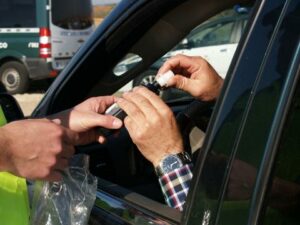
Among the report’s other recommendation was that police use passive alcohol sensors to better detect alcohol vapor in the ambient environment. In December, the agency recommended that states require ignition interlocks for all DUI offenders.
The American Beverage Institute called the Board’s BAC recommendation “ludicrous,” and said it ignores the science on impairment and targets moderate drinkers instead of dangerous drunk drivers.
But Hersman says that “alcohol-impaired crashes are not accidents. They are crimes. They can – and should – be prevented. The tools exist. What is needed is the will.”
The full NTSB report, “Reaching Zero: Actions to Reduce Alcohol-Impaired Driving,” can be found at https://go.usa.gov/TeQe.
If you need a lawyer or have questions please contact John Bateman at 844.DUI.ALLY