
Fourth of July weekend in South Carolina brings some of the most active DUI enforcement of the year, with increased checkpoints, saturation patrols, and heightened attention to traffic violations that may indicate impairment. Drivers across Greenville and surrounding areas should expect heavier police presence, more frequent stops, and quicker escalation of routine interactions into DUI investigations. The Bateman Law Firm regularly defends individuals charged during these enforcement periods and understands how quickly a normal holiday drive can turn into a criminal charge under South Carolina DUI laws.
350+ Reviews

5.0 Star Average



The Bateman Law Firm represents individuals facing DUI charges throughout Greenville, Clemson, and Spartanburg, and has extensive experience handling cases that begin during holiday enforcement operations where officers are specifically trained to identify and investigate suspected impaired driving.
Why Fourth of July DUI Enforcement Intensifies Across South Carolina 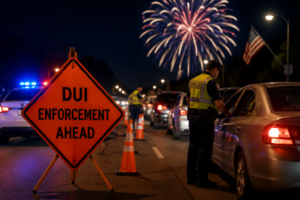
Fourth of July weekend consistently leads to increased roadway activity, large social gatherings, and a higher number of drivers consuming alcohol or other impairing substances. Law enforcement agencies in South Carolina respond with coordinated enforcement strategies designed to reduce accidents, deter impaired driving, and increase visibility on major travel corridors. This is not limited to one city or county but extends across highways, secondary roads, and popular entertainment areas where holiday traffic naturally concentrates.
Officers are deployed in larger numbers, and patrol schedules are often adjusted to focus on evening and nighttime hours when impaired driving risks are statistically higher. What many drivers do not realize is how quickly a simple traffic interaction can evolve into a DUI investigation once heightened enforcement begins. A minor issue such as a lane deviation or rolling stop can lead to closer scrutiny, field testing, and potentially arrest depending on officer observations.
During this time, agencies also run public awareness campaigns emphasizing safe driving and designated transportation options. Despite these efforts, enforcement remains strict, and officers are trained to identify even subtle indicators of impairment.




DUI Checkpoints and What Drivers Experience
DUI checkpoints are a common feature of Fourth of July enforcement in South Carolina. These are legally authorized stops conducted in predetermined locations where officers briefly screen drivers for signs of impairment. While they may appear routine on the surface, the process is structured to quickly identify individuals who may require further evaluation.
At a checkpoint, drivers are typically stopped for a brief interaction involving basic questions and visual observation. Officers may look for signs such as delayed response times, inconsistent answers, odor of alcohol, or visible impairment. If nothing unusual is detected, drivers are allowed to proceed without delay. If suspicion arises, the interaction escalates to secondary screening.
More details on how these checkpoints operate can be found here:
https://duigreenville.com/dui-checkpoint-laws-south-carolina/
Checkpoint placement during the Fourth of July weekend is strategic. Law enforcement often selects high-traffic corridors, areas near popular nightlife districts, and routes leading out of large events or celebrations. This increases the likelihood of encountering drivers returning from gatherings where alcohol consumption is common.
Saturation Patrols and Increased Roadside Stops
In addition to checkpoints, saturation patrols play a major role in Fourth of July DUI enforcement. These patrols involve concentrated groups of officers actively monitoring specific areas for traffic violations associated with impaired driving. Unlike checkpoints, these stops occur dynamically as officers observe driving behavior in real time.
This means drivers may be stopped for a wide range of reasons, including speeding, failure to maintain lane position, equipment violations, or following too closely. Once stopped, officers are trained to assess whether further investigation is warranted. This can include questioning, observation, and requests for field sobriety tests.
These patrols are particularly active during nighttime hours and near event-heavy areas where alcohol consumption is expected to be higher. The result is a significantly increased likelihood of roadside encounters compared to non-holiday periods.
"John Bateman is my absolute go to peer in the legal field when it comes to questions about DUI. . . . He has an innate ability to convey to clients what really matters in their cases. As a fellow attorney, I highly recommend John to anyone in the SC or NC areas who are looking for... legal representation when facing a DUI charge." "John is an excellent DUI attorney. He has received the same field sobriety test training as all police officers in the State, and also the same training as the people who are the instructors of the police officer training courses on field sobriety tests. He is very passionate about DUI's and I recommend him often to people who are facing serious charges in the upstate area." "Very knowledgeable and thorough in his preparation and representation of his clients. He cares for each of his clients and works extremely hard to achieve results. I highly recommend this lawyer.""He has an innate ability to convey to clients what really matters in their cases."
M. Brock

"An excellent DUI attorney. He has received the same field sobriety test training as all police officers in the State"
P. Hammond
"He cares for each of his clients and works extremely hard to achieve results."
C. Grubbs
Understanding Your Rights During a Traffic Stop
Drivers in South Carolina retain important constitutional rights during traffic stops, even in heightened enforcement periods. While identification must be provided, individuals are not required to answer questions that could be self-incriminating. This distinction becomes particularly important during DUI investigations, where officer questioning is designed to gather evidence of impairment.
A detailed breakdown of this process is available here:
https://duigreenville.com/what-happens-when-the-police-stop-you-for-dui/
Officers may ask where you are coming from, whether you have consumed alcohol, or how much you have had to drink. These questions are often asked before any formal testing begins. Field sobriety tests may then be requested, which are subjective evaluations influenced by fatigue, stress, footwear, road conditions, and environmental factors in addition to any potential impairment.
Chemical testing may follow if probable cause is established. South Carolina’s implied consent laws can result in administrative penalties if a driver refuses breath or blood testing, including license suspension independent of court proceedings.
Refusing Field Sobriety Tests Choosing a DUI AttorneyRelated Videos
Field Sobriety and Chemical Testing During Holiday Enforcement
Field sobriety testing is commonly used during Fourth of July enforcement to establish probable cause for arrest. These tests include standardized exercises such as balance assessments and eye-tracking evaluations. Despite their widespread use, they are not definitive measures of impairment and can be influenced by a wide range of non-alcohol-related factors.
If a driver is arrested, chemical testing may be conducted using breath or blood analysis. These results often become central evidence in DUI prosecutions, although they are not immune to challenge. Calibration issues, procedural errors, and timing discrepancies can all affect reliability.
After arrest, individuals are typically transported for booking, and administrative license suspension procedures may begin shortly afterward. Many drivers are unaware that consequences can start immediately, even before a court appearance occurs.
More information on this process is available here:
https://duigreenville.com/after-dui-arrest-in-greenville-sc/
What Penalties Look Like After a Fourth of July DUI Arrest
Penalties for DUI in South Carolina vary depending on prior history, blood alcohol concentration, and case-specific factors. Even a first offense can include fines, mandatory alcohol education programs, license suspension, and potential jail exposure depending on circumstances.
A first offense overview can be reviewed here:
https://duigreenville.com/first-offense-dui-south-carolina/
What makes Fourth of July enforcement particularly impactful is the speed at which cases begin moving through the system. Arrests occurring during holiday weekends often result in immediate administrative consequences, followed by criminal proceedings that require careful legal navigation. Insurance increases, employment concerns, and long-term driving record implications may also follow.
Legal Defense Strategies in Holiday DUI Cases
DUI cases that originate during Fourth of July enforcement often involve detailed factual analysis. The Bateman Law Firm examines whether the initial stop was lawful, whether checkpoint procedures were properly followed, and whether officer observations were supported by objective evidence. Field sobriety administration and chemical testing protocols are also reviewed for accuracy and compliance with legal standards.
Every case depends on its specific facts, but holiday enforcement cases frequently involve high-pressure environments where officers are processing large volumes of stops in a short time. This can increase the likelihood of procedural mistakes or incomplete observations that may become important in a defense strategy.
Drivers facing charges should also understand that early legal intervention can influence how evidence is preserved and evaluated. Statements made during or after arrest, timing of testing, and administrative filings can all affect case outcomes.
Planning Ahead During Fourth of July Weekend
The most effective way to avoid DUI exposure during Fourth of July weekend is advance planning. Designated drivers, rideshare services, and scheduled transportation are widely available and significantly reduce the likelihood of encountering enforcement situations that escalate into legal issues.
Law enforcement visibility during this period is intentionally high, and officers are specifically trained to focus on roadway safety and impairment detection. Even short trips can result in stops if driving behavior raises suspicion, making caution essential throughout the entire holiday period.
If you were arrested for DUI during Fourth of July enforcement, understanding your rights and options early in the process is critical. The Bateman Law Firm provides DUI defense representation throughout Greenville and surrounding areas, offering case evaluations and defense strategies tailored to South Carolina law and enforcement practices.
Disclaimer
This information is for educational purposes only and is not legal advice. Consult an attorney regarding your specific situation.