
Commercial drivers traveling through South Carolina during the summer often encounter increased roadside enforcement activity, including DUI checkpoints along major freight routes and interstate corridors. These stops can have serious consequences for CDL holders due to stricter federal and state standards that apply to commercial driving. The Bateman Law Firm represents CDL drivers facing DUI allegations and helps protect driving privileges, employment stability, and long-term career opportunities. This content explains how summer DUI checkpoints operate, what rights drivers have, and how CDL-specific legal exposure differs from standard driving situations.
350+ Reviews

5.0 Star Average



Summer CDL enforcement patterns across South Carolina highways 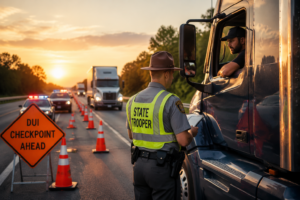
The Bateman Law Firm regularly assists commercial drivers who travel through South Carolina during high-traffic summer months when enforcement activity tends to increase along interstates, freight corridors, and construction-heavy routes. Seasonal travel patterns, tourism surges, and higher roadway congestion often lead law enforcement agencies to expand DUI checkpoint operations and roadside safety enforcement.
For CDL holders, these encounters carry heightened importance. Commercial drivers are held to stricter safety expectations than non-commercial drivers, and even a brief roadside interaction can escalate into consequences that affect employment and licensing status. Unlike typical traffic stops, CDL-related enforcement often involves additional scrutiny because of federal transportation regulations that govern commercial driving.
Why summer increases DUI checkpoint exposure for CDL drivers
Summer driving conditions in South Carolina bring more than just increased traffic volume. Law enforcement agencies frequently conduct targeted safety campaigns during this period, especially in areas where commercial vehicles and passenger traffic overlap heavily. Freight routes near Greenville, Spartanburg, and interstate corridors such as I-85 and I-26 are common areas for enforcement activity.
Increased visibility of DUI checkpoints during summer is often tied to:
- Higher tourism traffic and out-of-state drivers
- Increased roadway congestion and accident risk
- Seasonal enforcement initiatives focused on impaired driving
- Greater presence of commercial freight movement
More details about enforcement practices can be found here:
https://duigreenville.com/dui-checkpoint-laws-south-carolina/




How DUI checkpoints operate for commercial drivers
DUI checkpoints in South Carolina are structured roadside operations where officers stop vehicles at predetermined intervals. The purpose is to identify impaired driving and enforce traffic safety laws. For commercial drivers, these stops may involve additional documentation checks and closer observation due to the nature of commercial transportation regulations.
During a typical checkpoint, officers may:
- Request license, registration, and insurance documentation
- Observe driver behavior for signs of impairment
- Ask limited questions related to travel and compliance
- Conduct further evaluation if suspicion arises
For CDL drivers, these interactions can escalate quickly depending on officer observations. Even subtle indicators such as speech patterns, physical coordination, or inconsistencies in documentation can lead to additional testing or detention.
More context on DUI stop procedures is available here:
https://duigreenville.com/what-happens-when-the-police-stop-you-for-dui/
CDL legal standards and heightened consequences
Commercial drivers operate under stricter legal standards than non-commercial drivers. Federal regulations establish lower impairment thresholds and more severe penalties for violations involving commercial motor vehicles. A CDL holder can face consequences that affect both their commercial driving privileges and personal license status.
Key differences CDL drivers should understand include:
- Lower allowable alcohol concentration thresholds
- Mandatory reporting requirements in certain cases
- Potential employer notification following an arrest
- Risk of disqualification from commercial driving privileges
More information on South Carolina DUI laws is available here:
https://duigreenville.com/drunk-driving-laws-south-carolina/
These regulations mean that even a first-time allegation can have long-term professional consequences for drivers who depend on their CDL for income.
"John Bateman is my absolute go to peer in the legal field when it comes to questions about DUI. . . . He has an innate ability to convey to clients what really matters in their cases. As a fellow attorney, I highly recommend John to anyone in the SC or NC areas who are looking for... legal representation when facing a DUI charge." "John is an excellent DUI attorney. He has received the same field sobriety test training as all police officers in the State, and also the same training as the people who are the instructors of the police officer training courses on field sobriety tests. He is very passionate about DUI's and I recommend him often to people who are facing serious charges in the upstate area." "Very knowledgeable and thorough in his preparation and representation of his clients. He cares for each of his clients and works extremely hard to achieve results. I highly recommend this lawyer.""He has an innate ability to convey to clients what really matters in their cases."
M. Brock

"An excellent DUI attorney. He has received the same field sobriety test training as all police officers in the State"
P. Hammond
"He cares for each of his clients and works extremely hard to achieve results."
C. Grubbs
Rights CDL drivers retain during checkpoint stops
Even at lawful checkpoints, commercial drivers retain important constitutional protections. Officers must follow established procedures, and drivers are not required to waive their rights during roadside interactions.
CDL drivers should understand the following protections:
- Required production of license and registration does not require self-incrimination
- Searches generally require consent or probable cause
- Drivers may remain respectful while declining to answer unnecessary questions
- Field sobriety testing decisions depend on officer observations and legal thresholds
Understanding these rights can prevent unnecessary escalation during a routine stop. More information on checkpoint legality can be found here:
https://duigreenville.com/dui-checkpoint-laws-south-carolina/
Common mistakes CDL drivers make during roadside stops
Truck drivers often face pressure during checkpoint encounters, especially when schedules, delivery deadlines, and employer expectations are involved. That pressure can lead to mistakes that increase legal exposure.
Some common errors include:
- Providing more information than legally required
- Engaging in argumentative or defensive behavior
- Agreeing to searches without understanding consequences
- Failing to document details of the stop afterward
Each of these actions can complicate later legal review and potentially impact defense strategies if charges arise.
Refusing Field Sobriety Tests Choosing a DUI AttorneyRelated Videos
What happens after a CDL DUI allegation
If a commercial driver is suspected of impairment at a checkpoint or during a roadside stop, the situation may escalate into formal testing or arrest. The consequences can extend beyond court proceedings and may include administrative penalties affecting driving privileges.
Possible outcomes include:
- Temporary detention and chemical testing
- Immediate suspension of driving privileges in certain circumstances
- Employer notification depending on case details
- Court proceedings with potential long-term penalties
More procedural context is available here:
https://duigreenville.com/dui-in-greenville-standard-procedure/
Because CDL drivers rely on uninterrupted driving privileges, even temporary disruptions can have significant financial and professional impact.
Defense strategies for CDL drivers facing DUI allegations
Defense approaches in CDL-related DUI cases depend heavily on the circumstances of the stop, testing procedures, and officer conduct. Careful legal review is often necessary to identify procedural issues or evidentiary weaknesses.
Common defense considerations include:
- Whether the checkpoint was properly conducted
- Accuracy and administration of chemical testing
- Observations made by officers during the stop
- Compliance with required legal procedures
More information about initial defense strategies is available here:
https://duigreenville.com/first-defense-dui-south-carolina/
Early legal intervention is often important because CDL cases move quickly and involve both criminal and administrative timelines.
How The Bateman Law Firm supports commercial drivers
The Bateman Law Firm represents CDL holders across South Carolina who are facing DUI allegations or checkpoint-related legal concerns. These cases require careful attention because they often involve overlapping consequences affecting employment, licensing, and long-term driving eligibility.
Legal support may include reviewing checkpoint legality, evaluating officer conduct, and challenging testing procedures when appropriate. The goal is to protect both immediate driving privileges and long-term career stability for commercial drivers.
A consultation is available for drivers seeking clarity on their situation and next steps.
Disclaimer
This content is for informational purposes only and is not legal advice. Consult an attorney regarding your specific situation.