


350+ Reviews
5.0 Star Average






How Cold Weather Affects Field Sobriety Test Performance 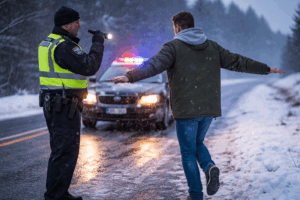
South Carolina winters can be quite cold, especially in Greenville and Spartanburg, where temperatures often drop to near freezing. Cold weather can cause a person’s body to react in ways that mimic the signs of intoxication. For instance, one of the most common tests administered is the “one-leg stand” test. The person being tested is asked to stand on one leg and count until the officer instructs them to stop. The task requires balance and coordination, both of which can be difficult to maintain in cold weather.
Shivering is a natural response to cold, and it can affect the body’s motor functions. This means that even a sober person may struggle to remain balanced on one leg or may sway during the test, which could be wrongly interpreted as signs of impairment.
Additionally, cold temperatures can stiffen muscles and reduce flexibility, making it even harder for a person to execute tasks like the “walk-and-turn” test, which requires walking a straight line heel-to-toe. If the driver is unable to complete the task with the precision required, they may be incorrectly classified as impaired, even though their physical abilities were affected by the temperature rather than alcohol or drugs.




Wind and Weather Distractions During Sobriety Tests
Wind is another environmental factor that plays a significant role in the accuracy of field sobriety tests. In winter, windy conditions are common, especially in open areas or rural roads where South Carolina’s landscape can leave individuals more exposed to the elements. Wind can cause physical discomfort, which distracts from the task at hand. For example, when asked to perform a series of tests that require focus, such as standing on one leg or walking in a straight line, the wind can create an additional challenge. Strong gusts of wind can make it difficult for someone to concentrate or maintain their balance, leading to errors that would not have occurred under calm conditions. Furthermore, wind can affect the driver’s ability to hear and respond to instructions, which could also influence their ability to follow through on test commands effectively. In a situation where weather distractions are added to the physical challenges posed by cold temperatures, it becomes clear that the reliability of field sobriety tests in such conditions can be compromised.Uneven and Slippery Surfaces: A Major Factor in Winter DUI Tests
In South Carolina, many rural roads and even some city streets can become uneven and hazardous during the winter months, especially when ice or snow is involved. An officer who administers a field sobriety test typically asks the driver to walk heel-to-toe in a straight line as part of the “walk-and-turn” test. While this test is designed to check for signs of intoxication, it’s challenging to perform even under ideal conditions. When the road is slippery, uneven, or icy, it becomes nearly impossible for any driver—whether sober or impaired—to pass the test without difficulty. On icy or snow-covered surfaces, the risk of slipping and falling is high, which is why the driver’s inability to maintain balance in these conditions should not be used as an indication of impairment. A sober person could easily stumble or lose their footing due to these hazardous conditions, making it crucial to challenge the results of field sobriety tests when weather factors play a role. The presence of ice or snow on the ground can further complicate the “one-leg stand” test. As the driver is asked to balance on one leg, the added instability of the ground beneath them can skew their performance. Law enforcement officers should be aware of these conditions and recognize that performing these tasks in winter weather is significantly more difficult than on dry, stable surfaces."He has an innate ability to convey to clients what really matters in their cases."
"John Bateman is my absolute go to peer in the legal field when it comes to questions about DUI. . . . He has an innate ability to convey to clients what really matters in their cases. As a fellow attorney, I highly recommend John to anyone in the SC or NC areas who are looking for... legal representation when facing a DUI charge."
M. Brock

"An excellent DUI attorney. He has received the same field sobriety test training as all police officers in the State"
"John is an excellent DUI attorney. He has received the same field sobriety test training as all police officers in the State, and also the same training as the people who are the instructors of the police officer training courses on field sobriety tests. He is very passionate about DUI's and I recommend him often to people who are facing serious charges in the upstate area."
P. Hammond
"He cares for each of his clients and works extremely hard to achieve results."
"Very knowledgeable and thorough in his preparation and representation of his clients. He cares for each of his clients and works extremely hard to achieve results. I highly recommend this lawyer."
C. Grubbs
The Reliability of Field Sobriety Tests in Winter Conditions
Given these challenges, it’s clear that field sobriety tests conducted during winter months in South Carolina may not provide an accurate picture of a driver’s impairment. While these tests are designed to assess a person’s physical coordination, environmental conditions such as cold weather, wind, and slippery surfaces can interfere with the person’s ability to perform them correctly. A driver’s failure to complete the tests properly in these conditions may not indicate intoxication, but rather the effects of the weather. For individuals arrested during winter months, it’s important to remember that the results of field sobriety tests could be contested. Experienced DUI defense lawyers understand the unique challenges that weather poses to these tests and can use this information to build a strong defense. By demonstrating that environmental factors played a significant role in the driver’s performance, an attorney can cast doubt on the reliability of the evidence presented by law enforcement.What To Do If Arrested for DUI During Winter in SC
If you find yourself arrested for DUI in Greenville or Spartanburg, especially during the winter months when weather conditions are poor, it’s essential to seek legal counsel immediately. A skilled DUI lawyer can help you understand your rights and explore all options available for your defense. The Bateman Law Firm is experienced in handling DUI cases, particularly those where field sobriety tests may have been influenced by environmental factors like cold temperatures, wind, or icy conditions. The Bateman Law Firm can examine the circumstances surrounding your arrest, gather crucial evidence, and work tirelessly to ensure your rights are protected. If you believe your field sobriety tests were impacted by winter weather, our team can help you challenge the results effectively.Related Videos
Refusing Field Sobriety Tests
Choosing a DUI Attorney