
Yes. You can face a DUI charge in South Carolina even when the alleged driving happened on private property. South Carolina Code Section 56-5-2930 applies to driving a motor vehicle “within this State” while alcohol, drugs, or a combination of substances materially and appreciably impairs your ability to drive. The statute does not limit DUI charges to public highways.
South Carolina courts have also recognized that DUI law can apply on private property. In State v. Allen, 314 S.C. 539, 431 S.E.2d 563 (1993), the South Carolina Supreme Court addressed a case involving a truck driven in a private driveway that struck a storage building. The Court held that the DUI statute was not limited to public highways and applied within South Carolina’s boundaries.
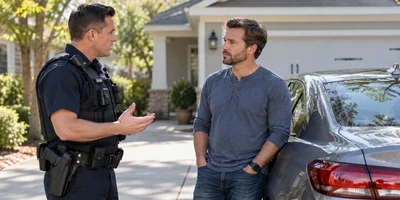
If your DUI case began on private property, the location still matters. It can affect how police encountered you, what they could observe, whether there is proof that you actually drove, what video or witness evidence exists, and whether the investigation complied with South Carolina law.
South Carolina DUI statute:
https://www.scstatehouse.gov/code/t56c005.php
Key Point: Private property does not automatically prevent a South Carolina DUI charge. The facts surrounding the driving, police contact, and evidence still matter.


350+ Reviews
5.0 Star Average





Can South Carolina DUI Law Apply on Private Property?
Yes. South Carolina Code Section 56-5-2930 makes it unlawful to drive a motor vehicle within the state while your faculties to drive are materially and appreciably impaired by alcohol, drugs, or a combination of substances.
The wording does not require the driving to occur on a public highway.
State v. Allen addressed that issue directly. The defendant drove a truck in a private driveway and struck a storage building. The South Carolina Supreme Court concluded that the DUI statute was not limited to public highways.
Private property can include places such as:
A residential driveway
An apartment or condominium parking lot
A privately owned business parking lot
A private road
A gated residential road
A farm or commercial property
Other privately owned land
The exact facts still control. The State must prove the required elements of the charge, and your defense can challenge the evidence used to support those elements.
For a broader explanation of South Carolina DUI law, visit:
https://duigreenville.com/dui-laws-and-information-for-south-carolina/
Why Private Property Can Still Matter in a DUI Case
The fact that South Carolina DUI law can apply on private property does not make the location meaningless. Where the encounter happened can shape several legal and factual questions.
A private driveway may raise different issues from a shopping center parking lot. A gated residential road may involve different access questions from an open business lot. A crash on private land may bring police to the scene after a 911 call, while another case may begin because an officer personally observed a vehicle enter private property from a public road.
Those differences can affect:
What the officer personally observed
Where the officer was located
How the officer approached you
Whether a search occurred
Whether statements were obtained lawfully
Whether the State can prove that you drove
Whether video or witness evidence supports the accusation
Whether probable cause supported an arrest
A DUI lawyer can review those facts together instead of treating the words “private property” as the only issue.




Does the State Still Have to Prove That You Drove?
Yes. Private property does not remove the State’s burden to prove that you drove.
Section 56-5-2930 uses the word “drive.” If an officer arrives after a vehicle has already stopped, the case may depend on evidence showing who drove, when the vehicle moved, and your condition at the relevant time.
Evidence may include:
Statements made by you, passengers, or witnesses
Witness observations
Security camera footage
Doorbell camera footage
Damage to a vehicle, fence, building, mailbox, or other property
The location and position of the vehicle
Possession or location of the keys
Dispatch records and 911 calls
Police body camera footage
Police dash camera footage
Receipts, phone records, or other timeline evidence
Sitting in a parked vehicle is not the same factual situation as an officer personally watching you drive. The prosecution may still try to prove driving through circumstantial evidence, but that evidence can be reviewed and challenged.
For more information about DUI defense issues, visit:
https://duigreenville.com/defenses-to-a-dui-charge/
What If Police Never Saw the Vehicle Move?
A lack of direct observation can become a central issue in a private-property DUI case.
Suppose police arrive at a Greenville home after a neighbor reports that a vehicle hit a fence. You are standing outside when officers arrive, and no officer personally saw the vehicle move. The investigation may focus on witness accounts, statements, video, physical damage, who had access to the vehicle, and the timing of any alcohol or drug use.
The same issue can arise in an apartment parking lot in Spartanburg or on private property near Clemson. The location does not automatically defeat the charge. The State still needs evidence connecting you to actual driving and to impairment at the relevant time.
You should not assume that a case is automatically dismissible because no officer witnessed the driving. You also should not assume that the charge cannot be challenged. The strength of the case depends on the full evidence.
"He has an innate ability to convey to clients what really matters in their cases."
"John Bateman is my absolute go to peer in the legal field when it comes to questions about DUI. . . . He has an innate ability to convey to clients what really matters in their cases. As a fellow attorney, I highly recommend John to anyone in the SC or NC areas who are looking for... legal representation when facing a DUI charge."
M. Brock

"An excellent DUI attorney. He has received the same field sobriety test training as all police officers in the State"
"John is an excellent DUI attorney. He has received the same field sobriety test training as all police officers in the State, and also the same training as the people who are the instructors of the police officer training courses on field sobriety tests. He is very passionate about DUI's and I recommend him often to people who are facing serious charges in the upstate area."
P. Hammond
"He cares for each of his clients and works extremely hard to achieve results."
"Very knowledgeable and thorough in his preparation and representation of his clients. He cares for each of his clients and works extremely hard to achieve results. I highly recommend this lawyer."
C. Grubbs
Can Police Conduct a DUI Investigation on Private Property?
Police may investigate suspected impaired driving on private property. The legality of a specific police entry, approach, detention, search, or arrest depends on the facts and the constitutional rules that apply to that location and encounter.
A case may begin because of:
A crash report
A 911 call
A property owner complaint
An officer’s observation of driving
A witness report
A vehicle found after an incident
Your privacy interests can differ depending on where police went and what they did. An open parking lot is not the same setting as an area closely associated with a private home. A lawyer may review whether officers had a lawful basis for the contact, whether a search occurred, whether consent was given, whether an exception to a warrant requirement applied, whether statements were obtained lawfully, and whether probable cause supported the arrest.
For more information about DUI stops and investigations, visit:
https://duigreenville.com/what-happens-when-the-police-stop-you-for-dui/
Do Implied Consent Rules Still Apply After a Private-Property DUI Arrest?
Potentially, yes.
South Carolina’s implied consent law provides that a person who drives a motor vehicle in the state is considered to have given consent to chemical testing under the circumstances described in the statute after an arrest for alleged impaired driving.
A private-property location does not automatically remove implied consent issues from a case. Refusing a requested chemical test, or producing an alcohol concentration covered by the statute, can create separate driver’s license consequences and administrative procedures.
Those license issues can proceed separately from the criminal DUI charge, so deadlines may apply.
For more information about implied consent in South Carolina, visit:
https://duigreenville.com/implied-consent-greenville-sc/
Related Videos
Refusing Field Sobriety Tests
Choosing a DUI Attorney
Video Evidence Can Be Especially Useful in a Private-Property DUI Case
Private-property DUI cases can turn on details that video preserves.
A business parking lot may have surveillance cameras. A residence may have a doorbell camera. An apartment complex may record entrances and parking areas. Police body cameras and dash cameras may capture statements, field sobriety testing, the vehicle, property damage, or the surrounding scene.
South Carolina also has DUI video-recording requirements that can become relevant depending on the investigation and the circumstances of the case.
Video may:
Confirm or dispute who was driving
Show when a vehicle moved
Support or contradict a witness
Help establish the timing of events
Record field sobriety testing
Show the condition and position of the vehicle
Preserve statements made at the scene
Document details that witnesses may later remember differently
For more information about South Carolina DUI video requirements, visit:
https://duigreenville.com/dui-videotaping-laws-south-carolina/
What Should You Do After a DUI Arrest on Private Property?
If you were arrested after an incident on private property, preserve information before it disappears.
You can take steps such as:
Write down a timeline while the events are still fresh
Save photographs and videos
Preserve text messages and call records
Keep receipts and rideshare records
Preserve available phone location information
Identify witnesses who saw who was driving
Identify witnesses who saw when alcohol or drugs were consumed
Note any nearby homes, businesses, gates, or parking areas with cameras
Keep every document provided by police, the jail, the court, or the South Carolina Department of Motor Vehicles
Avoid posting details of the incident on social media
Speak with a DUI defense lawyer before evidence is lost or overwritten
Surveillance systems may overwrite footage quickly. Early preservation can matter when a case depends on whether you drove, when you drove, or what occurred before police arrived.
Talk With a South Carolina DUI Defense Lawyer
A DUI allegation on private property can involve questions about actual driving, impairment, police access, witness credibility, video evidence, chemical testing, and driver’s license consequences.
The Bateman Law Firm represents people facing DUI allegations in Greenville, Clemson, Spartanburg, and nearby Upstate South Carolina communities. Attorney John C. Bateman is a former Army JAG prosecutor and has completed DUI detection, field sobriety testing, and instructor-level training through the National Highway Traffic Safety Administration.
The firm offers consultations and can review how South Carolina law applies to the facts of your case.
Call The Bateman Law Firm at (864) 406-3776.
Learn more about John C. Bateman:
https://duigreenville.com/john-bateman/
This article is for informational purposes only and is not legal advice. Consult an attorney about your specific situation.