
South Carolina law enforcement agencies may use sobriety checkpoints to inspect licenses and vehicle documents while watching for signs of impaired driving. Summer travel can bring more traffic, holiday events, lake trips, concerts, and late-night driving across Greenville, Clemson, Spartanburg, and nearby Upstate communities. A checkpoint contact may remain brief, or it may become a DUI investigation when an officer reports alcohol odor, unusual speech, fumbling, an admission of drinking, visible containers, or difficulty following instructions.
The Bateman Law Firm helps drivers understand how checkpoint procedures, field sobriety tests, police video, chemical testing, and license deadlines may affect a South Carolina DUI or DUAC case.
A checkpoint arrest is not a conviction. A timely case review can help preserve video, records, and license-hearing options.
350+ Reviews

5.0 Star Average



Why Summer Brings More Traffic Enforcement in South Carolina 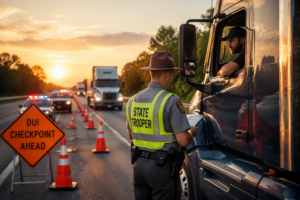
Summer travel often includes Memorial Day weekend, Independence Day events, concerts, festivals, cookouts, lake outings, and trips that end after dark. More vehicles also travel between Greenville, Clemson, Spartanburg, and recreation areas near Lakes Hartwell and Keowee.
The South Carolina Department of Public Safety identifies the period from Memorial Day through Labor Day as the “100 Deadly Days of Summer.” In its May 21, 2026 announcement, the agency stated that this busy travel period is typically associated with a rise in traffic fatalities. The announcement focused on increased seat-belt enforcement and safer travel at the start of the summer season.
Official SCDPS announcement:
https://scdps.sc.gov/news/2026/052126
Sobriety checkpoints are a separate impaired-driving enforcement tool. The National Highway Traffic Safety Administration states that checkpoints are designed to identify impaired drivers and deter driving after drinking by increasing the perceived risk of detection and arrest. Officers may stop every vehicle or use a fixed pattern, such as every third or tenth vehicle, under the checkpoint plan.
NHTSA checkpoint guidance:
What Happens at a South Carolina Sobriety Checkpoint?
A sobriety checkpoint is a temporary roadblock operated under an agency plan. The initial contact is usually limited to a short safety and document inquiry. An officer may ask you to lower the window and provide your driver’s license, vehicle registration, and proof of insurance.
During that contact, the officer may report observations such as:
- Alcohol or marijuana odor
- Red or watery eyes
- Slurred, slow, or unusual speech
- Delayed reactions or confusion
- Difficulty locating documents
- Open containers or visible substances
- Statements about alcohol or drug use
- Poor balance or coordination
One observation does not prove impairment. Fatigue, allergies, anxiety, medication, medical conditions, heat, lighting, communication issues, and nervousness can affect how a person looks or responds. The full video and surrounding facts may provide more information than a brief description in a police report.
Read more about South Carolina checkpoint rights and responsibilities:
https://duigreenville.com/south-carolina-dui-checkpoints-your-rights-and-responsibilities/
How a Brief Checkpoint Stop Becomes a DUI Investigation
A properly operated checkpoint may allow an initial stop without individualized suspicion. To extend the detention beyond the checkpoint’s limited purpose, an officer generally needs reasonable suspicion, consent, or another lawful basis.
The officer may direct a driver into a secondary screening area after reporting alcohol odor, an admission of drinking, visible alcohol, unusual behavior, inconsistent answers, or another claimed sign of impairment. The officer may then ask more questions and request roadside exercises.
The three standardized field sobriety tests commonly discussed in DUI investigations are:
- Horizontal gaze nystagmus
- Walk-and-turn
- One-leg stand
Roadside conditions can affect performance. Relevant conditions may include:
- Uneven or sloped pavement
- Passing traffic and vehicle lights
- Heat, rain, or wind
- Unsuitable footwear
- An old injury or balance condition
- Fatigue or anxiety
- Unclear instructions
- Limited space near the roadway
Field sobriety testing is not a simple pass-or-fail examination. Officers are trained to look for specific clues, but the administration, instructions, surface, lighting, and person’s physical condition may become disputed issues.
South Carolina Code Section 56-5-2953 states that refusing a field sobriety test does not constitute disobeying a police command. A refusal may still affect how the officer proceeds and may be discussed as part of the case.
Learn more about field sobriety testing:
https://duigreenville.com/field-sobriety-test/




What Police Need to Make a DUI Arrest
South Carolina Code Section 56-5-2930 makes it unlawful to drive while alcohol, drugs, or a combination of substances materially and appreciably impair a person’s ability to drive. Section 56-5-2933 creates the separate offense of driving with an unlawful alcohol concentration, often called DUAC, when a person drives with an alcohol concentration of 0.08 percent or higher.
An officer may base an arrest decision on several types of evidence, including:
- Driving behavior
- Statements
- Physical observations
- Field sobriety performance
- Open containers or other visible evidence
- Dash-camera or body-camera recordings
- Chemical test evidence
- The total circumstances documented during the investigation
A roadside breath result is not required in every DUI arrest. After an arrest, the prosecution must prove the charged offense beyond a reasonable doubt. A police report stating that a driver “failed” an investigation does not decide the court case.
A first DUI or DUAC conviction may involve a fine, jail or public service, enrollment in the Alcohol and Drug Safety Action Program, and driving restrictions. Current South Carolina law also requires a person convicted of a first DUI or DUAC offense to enter the Ignition Interlock Device Program and obtain an ignition interlock restricted license for six months, subject to the applicable statutes and case circumstances. Penalties increase with prior offenses and higher alcohol concentrations.
South Carolina motor vehicle laws:
https://www.scstatehouse.gov/code/t56c005.php
Breath Testing and Immediate License Issues
After a DUI arrest, South Carolina’s implied consent law may require chemical testing of breath, blood, or urine under statutory procedures. In an alcohol-based case, the law generally directs the officer to offer a breath test first. Different procedures may apply when a person cannot provide a breath sample or when drug impairment is suspected.
The law also gives an arrested person the right to obtain an additional test from a qualified person at the person’s expense. The person must be notified of that right.
Refusing the requested chemical test, or producing an alcohol concentration of 0.15 percent or higher, may trigger an immediate administrative license suspension separate from the criminal charge. South Carolina Code Section 56-5-2951 provides 30 days from the notice of suspension to request a contested case hearing. Missing that deadline may limit the opportunity to challenge the administrative suspension.
Breath-testing issues may include:
- Whether the operator was qualified
- Whether required instructions and warnings were given
- Whether the machine completed required checks
- Whether the test procedure was recorded
- Whether the required waiting period was observed
- Whether maintenance or malfunction records raise questions
- Whether the test timing complied with the statute
- Whether an additional test was requested or obtained
Learn more about South Carolina breath testing:
https://duigreenville.com/breathalyzer/
"John Bateman is my absolute go to peer in the legal field when it comes to questions about DUI. . . . He has an innate ability to convey to clients what really matters in their cases. As a fellow attorney, I highly recommend John to anyone in the SC or NC areas who are looking for... legal representation when facing a DUI charge." "John is an excellent DUI attorney. He has received the same field sobriety test training as all police officers in the State, and also the same training as the people who are the instructors of the police officer training courses on field sobriety tests. He is very passionate about DUI's and I recommend him often to people who are facing serious charges in the upstate area." "Very knowledgeable and thorough in his preparation and representation of his clients. He cares for each of his clients and works extremely hard to achieve results. I highly recommend this lawyer.""He has an innate ability to convey to clients what really matters in their cases."
M. Brock

"An excellent DUI attorney. He has received the same field sobriety test training as all police officers in the State"
P. Hammond
"He cares for each of his clients and works extremely hard to achieve results."
C. Grubbs
Why Police Video Matters at a Checkpoint
South Carolina Code Section 56-5-2953 requires video recording of conduct at the incident site and breath-test site in DUI and DUAC cases. The incident recording must include field sobriety tests that are administered and the arrest. The breath-test recording must include the test procedure and the required pretest waiting period, subject to statutory exceptions.
Roadblocks present a specific recording issue. When recording equipment was not activated by blue lights, the statute states that recording must begin as soon as practicable.
Video may show:
- Whether the checkpoint was clearly marked
- How vehicles were selected
- How long the initial detention lasted
- The reason given for secondary screening
- The officer’s questions and instructions
- The testing location and surface
- The driver’s speech, movement, and responses
- Whether the report matches the recorded interaction
- Whether the breath-test procedure was recorded
Missing or incomplete video does not automatically end every case. The statute contains exceptions and requires review of the circumstances. The recording can still be central to evaluating the stop, detention, testing, arrest, and written report.
Can a Summer Sobriety Checkpoint Be Challenged?
Checkpoint stops are not automatically lawful merely because officers call the location a roadblock. The Fourth Amendment applies. South Carolina courts examine the checkpoint’s purpose and reasonableness, including whether the operation served a lawful public-safety purpose and limited officer discretion.
A DUI defense lawyer may review:
- The written checkpoint plan
- Supervisory authorization
- The stated purpose of the checkpoint
- Who selected the location and time
- The method used to select vehicles
- Whether officers followed a neutral pattern
- Signs, lighting, visibility, and safety measures
- The length of the initial detention
- Checkpoint logs and officer reports
- Dash-camera and body-camera recordings
- The reason for secondary screening
- Field sobriety instructions and conditions
- Breath-test records and statutory warnings
- Whether probable cause supported the arrest
The State must justify the checkpoint stop, any extended detention, the arrest, and the evidence it seeks to use. A legal challenge depends on the plan, the officers’ actions, the available recordings, and the facts of the individual case.
Refusing Field Sobriety Tests Choosing a DUI AttorneyRelated Videos
What to Do After a Checkpoint DUI Arrest
Preserve the information that may matter later. Practical steps include:
- Save the ticket, bond paperwork, suspension notice, breath-test documents, and court information.
- Write down the route, checkpoint location, officer statements, questions, tests, witnesses, and timing while the events remain fresh.
- Photograph any relevant footwear, injuries, medications, or medical devices.
- Keep receipts, messages, location records, and transportation records that may help establish a timeline.
- Avoid posting details about the arrest on social media.
- Address the 30-day administrative hearing deadline promptly when a refusal or 0.15 percent or higher result caused a suspension.
- Ask counsel to preserve and request checkpoint plans, logs, video, breath-test records, and dispatch information.
Review practical steps after a Greenville DUI arrest:
https://duigreenville.com/after-dui-arrest-in-greenville-sc/
Talk With a South Carolina DUI Defense Lawyer
The Bateman Law Firm represents people accused of DUI in Greenville, Clemson, Spartanburg, and nearby Upstate South Carolina communities. Attorney John C. Bateman is a former Army JAG prosecutor and an NHTSA-certified standardized field sobriety test instructor. His training can help the defense team examine police procedures, roadside testing, video evidence, and the State’s proof.
A checkpoint arrest can be confusing when police did not report poor driving before the stop. A prompt review can identify license deadlines, preserve evidence, and explain the options available for the criminal and administrative cases.
Greenville DUI defense attorney:
https://duigreenville.com/greenville-dui-defense-attorney/
Contact The Bateman Law Firm:
https://duigreenville.com/contact/
Call (864) 406-3004 for a free consultation.
tel:+18644063004
The firm has offices in Greenville, Clemson, and Spartanburg, South Carolina, and serves nearby areas.
This article is for informational purposes only and is not legal advice. Reading this article or contacting the firm through the website does not create an attorney-client relationship. Consult an attorney about your specific situation.