
A DUI arrest during back-to-school weekend in Greenville can create two separate proceedings: a criminal case and, after a breath test refusal or a result of 0.15 percent or higher, an immediate driver’s license suspension. The seasonal setting does not change South Carolina DUI law. Crowded streets, unfamiliar routes, late-night gatherings, student move-ins, and heavier traffic may shape how a stop begins and what evidence an officer collects.
The Bateman Law Firm helps people understand the arrest process, the 30-day administrative hearing deadline, field sobriety testing, breath or blood evidence, required police video, and the possible consequences of a conviction. A charge is not a conviction. The reason for the stop, officer procedures, test conditions, recordings, and other evidence may affect the defense.
A back-to-school weekend arrest can create fast deadlines. Review the license notice and preserve evidence before the first court date.
350+ Reviews

5.0 Star Average




Why Back-to-School Traffic Can Lead to a DUI Investigation 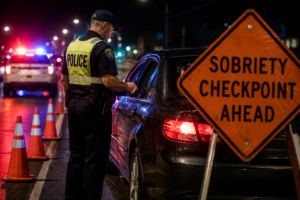
Families may be moving students, attending end-of-summer gatherings, or traveling through crowded Greenville streets near apartments, campuses, shopping areas, and downtown destinations. A driver who is unfamiliar with the area may brake late, miss a turn, or change lanes suddenly.
Those actions may attract an officer’s attention even when alcohol is not the cause. A DUI investigation may also begin after a collision, checkpoint, speeding stop, equipment violation, or report from another driver.
Common observations listed in DUI reports include:
- An odor of alcohol
• Red or watery eyes
• Slurred, slow, or unusual speech
• Difficulty locating a license or registration
• An admission of drinking
• Confusion or delayed responses
• Difficulty following instructions
• Poor balance or coordination
Back-to-school weekend is context, not proof. The State still must establish a lawful basis for the stop or detention, probable cause for the arrest, and proof of the charged offense.
What South Carolina Must Prove in a DUI Case
South Carolina Code Section 56-5-2930 makes it unlawful to drive while alcohol, drugs, or a combination of substances materially and appreciably impairs the person’s ability to drive. Section 56-5-2933 separately addresses driving with an alcohol concentration of 0.08 percent or higher.
A person may face a DUI accusation based on officer observations even when a breath result is below 0.08 percent or no breath result exists. A qualifying alcohol concentration result may support a driving with an unlawful alcohol concentration, or DUAC, charge.
The prosecution may rely on several forms of evidence:
- The reason for the traffic stop or detention
• Driving behavior before the stop
• Statements made by the driver
• Field sobriety test performance
• Dash-camera or body-camera recordings
• Breath, blood, or urine test results
• Witness accounts
• Evidence from a collision scene
• Dispatch records and officer reports
A Greenville DUI lawyer can compare the written report with the recordings, testing records, and other evidence rather than treating the officer’s conclusions as the final word.
Learn more about local DUI defense issues:
https://duigreenville.com/greenville-dui-lawyer/




What Happens During the Roadside Investigation
After the initial stop, an officer may ask where you have been, whether you consumed alcohol, and whether you will perform field sobriety tests. These roadside exercises gather evidence and may help the officer decide whether probable cause exists for an arrest.
Conditions can affect performance. Relevant factors may include:
- Traffic noise
• Flashing lights
• Uneven or sloped pavement
• Footwear
• Fatigue or limited sleep
• Anxiety
• Injuries or medical conditions
• Balance problems
• Unclear instructions
• Long drives or recent physical exertion
South Carolina law requires video recording of a DUI suspect’s conduct at the incident site and the breath test site. The incident recording generally must begin no later than the activation of the officer’s blue lights and must include field sobriety tests and the arrest. The breath test site recording must include the testing process and the required 20-minute waiting period, subject to limited statutory exceptions.
Review more information about roadside testing:
https://duigreenville.com/dui-field-sobriety-tests-in-greenville/
"John Bateman is my absolute go to peer in the legal field when it comes to questions about DUI. . . . He has an innate ability to convey to clients what really matters in their cases. As a fellow attorney, I highly recommend John to anyone in the SC or NC areas who are looking for... legal representation when facing a DUI charge." "John is an excellent DUI attorney. He has received the same field sobriety test training as all police officers in the State, and also the same training as the people who are the instructors of the police officer training courses on field sobriety tests. He is very passionate about DUI's and I recommend him often to people who are facing serious charges in the upstate area." "Very knowledgeable and thorough in his preparation and representation of his clients. He cares for each of his clients and works extremely hard to achieve results. I highly recommend this lawyer.""He has an innate ability to convey to clients what really matters in their cases."
M. Brock

"An excellent DUI attorney. He has received the same field sobriety test training as all police officers in the State"
P. Hammond
"He cares for each of his clients and works extremely hard to achieve results."
C. Grubbs
What Happens After a DUI Arrest
After an arrest, you may be transported for breath testing, booked, given bond paperwork, and assigned a court date. The vehicle may be released to another person or towed, depending on the agency, the circumstances, and whether a collision occurred.
The criminal case may proceed in municipal court, magistrates court, or another court with jurisdiction over the charge. A first court date is not necessarily a trial. It may address representation, scheduling, discovery, or other procedural matters.
Preserve information during the first few days:
- Save the ticket, bond documents, suspension notice, breath test paperwork, tow records, and court instructions.
• Write down the route, stop location, officer statements, testing instructions, passengers, witnesses, and timeline.
• Preserve photographs, messages, receipts, location records, and transportation records.
• Record information about footwear, injuries, medications, medical devices, fatigue, and road conditions.
• Avoid posting details about the arrest on social media.
• Follow every bond condition and court instruction.
Review the steps that may follow a Greenville DUI arrest:
https://duigreenville.com/after-dui-arrest-in-greenville-sc/
The Driver’s License Case May Start Immediately
The driver’s license proceeding is separate from the criminal charge. Under South Carolina’s implied consent law, refusal of the requested chemical test can lead to a suspension of at least six months. A test result of 0.15 percent or higher can lead to a suspension of at least one month.
The notice of suspension advises the driver of the right to request a contested case hearing within 30 days of the notice. Missing the deadline waives the right to that hearing, and the suspension continues for the applicable period.
A driver who requests a hearing may have options involving a temporary alcohol license or enrollment in the Ignition Interlock Device Program, depending on the circumstances. The available option may depend on the notice, prior record, test result, hearing request, and current Department of Motor Vehicles requirements.
Because the criminal and administrative proceedings are separate, a later dismissal of the criminal charge does not automatically resolve every license issue.
Review DUI license consequences in Greenville:
https://duigreenville.com/dui-license-consequences-in-greenville/
Refusing Field Sobriety Tests Choosing a DUI AttorneyRelated Videos
Possible Penalties for a First DUI or DUAC Conviction
For a first offense under Section 56-5-2930 or Section 56-5-2933, the statutory penalty begins with a $400 fine or 48 hours to 30 days in jail. The court may allow 48 hours of public service instead of the minimum jail term.
Higher alcohol concentration findings increase the penalty range:
- At least 0.10 percent but less than 0.16 percent: a $500 fine or 72 hours to 30 days in jail
• At least 0.16 percent: a $1,000 fine or 30 to 90 days in jail
The statute permits public service alternatives for the minimum jail period in these first-offense brackets. Court assessments and other expenses can substantially exceed the base fine.
A conviction also involves driver’s license consequences. Current South Carolina law generally requires a six-month ignition interlock period for a first DUI or DUAC conviction, subject to statutory exceptions and Department of Motor Vehicles requirements. The person must also enroll in and successfully complete the Alcohol and Drug Safety Action Program.
Other consequences may involve:
- Employment
• Professional licensing
• School discipline
• Scholarships or financial aid
• Insurance
• Transportation
• Security clearances
• Immigration concerns
The effect depends on the person’s age, record, occupation, school policies, immigration status, and final case outcome.
Underage Drivers Face Separate Concerns
Back-to-school weekend often includes drivers younger than 21. South Carolina’s zero-tolerance law authorizes an administrative suspension when a driver under 21 has an alcohol concentration of 0.02 percent or higher.
For a first incident under that statute:
- A qualifying test result can lead to a three-month suspension.
• Refusal of the requested test can lead to a suspension of at least six months.
• The driver has 30 days from the notice of suspension to request a contested case hearing.
The officer’s charging decision, the driver’s age, the test result, and the evidence determine which underage provisions apply. Students may also face campus conduct proceedings with standards and consequences that differ from criminal court.
Learn more about underage DUI concerns:
https://duigreenville.com/greenville-underage-dui-attorney/
What a DUI Defense Review May Examine
A careful defense review focuses on the evidence rather than assumptions about a busy weekend.
Relevant questions may include:
- Did the officer have a lawful reason to stop or detain the vehicle?
• Did the officer accurately describe the driving and roadside interaction?
• Were field sobriety tests properly instructed, demonstrated, and recorded?
• Did road conditions, footwear, fatigue, injuries, or medical conditions affect performance?
• Was the breath testing device functioning properly?
• Was the test administered by a qualified operator under required procedures?
• Were the statutory warnings given correctly?
• Was the required video created, preserved, and complete?
• Do the recordings match the written report?
• Do dispatch records, receipts, messages, or location data clarify the timeline?
• Does the evidence support impairment, an unlawful alcohol concentration, or neither?
No single defense applies to every case. The useful approach is to identify what the State can prove, what the recordings show, and whether officers followed the required procedures.
Steps to Take After a Back-to-School Weekend DUI
Do not wait for the court date before reviewing the license notice. The 30-day administrative hearing deadline may expire before meaningful progress occurs in the criminal case.
Take these steps promptly:
- Read every page of the paperwork.
• Identify the issuance date on any notice of suspension.
• Keep all documents in one place.
• Write a detailed timeline while the events remain fresh.
• Preserve photographs, receipts, messages, and location information.
• Identify passengers and other witnesses.
• Avoid discussing the allegations on social media.
• Do not contact witnesses in a way that could be misunderstood.
• Follow every bond condition.
• Attend every required court appearance.
• Contact counsel early enough to review the hearing deadline and request evidence.
Early action cannot guarantee a result. It can preserve information, protect available options, and give the defense more time to examine video, testing records, and officer procedures.
Talk With a Greenville DUI Defense Lawyer
The Bateman Law Firm represents people facing DUI charges in Greenville, Clemson, Spartanburg, and nearby Upstate South Carolina communities. Attorney John C. Bateman is a former Army JAG prosecutor and a National Highway Traffic Safety Administration-certified standardized field sobriety test instructor. His background can help the defense team examine police procedures, roadside testing, video evidence, chemical testing, and the State’s proof.
A back-to-school weekend arrest may involve criminal court, a separate license proceeding, testing evidence, police recordings, and deadlines that begin immediately. A case review can help you understand the allegations, identify the next deadline, and evaluate the available defense issues.
Greenville DUI defense information:
https://duigreenville.com/greenville-dui-defense-attorney/
Contact The Bateman Law Firm:
https://duigreenville.com/contact/
Call (864) 406-3004 to schedule a consultation:
tel:+18644063004
The firm serves Greenville, Clemson, Spartanburg, and nearby areas throughout Upstate South Carolina.
This article is for informational purposes only and is not legal advice. Reading this article or contacting the firm does not create an attorney-client relationship. Consult an attorney about your specific situation.