
Sleeping in your car after drinking does not automatically make you guilty of DUI in South Carolina. Police can still investigate and file a charge when the facts suggest that you drove while impaired before parking. South Carolina DUI law focuses on driving, and state appellate decisions have treated vehicle movement as part of that requirement.
The Bateman Law Firm helps people in Greenville, Clemson, Spartanburg, and nearby Upstate South Carolina communities examine whether the State can prove that the vehicle moved while the person was impaired. These cases often depend on circumstantial evidence, recorded statements, police video, chemical testing, and the timeline between driving and drinking.
350+ Reviews

5.0 Star Average





Why Sleeping in a Parked Car Can Still Lead to a DUI Charge 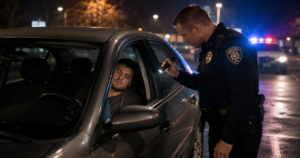
Stopping and sleeping is safer than continuing to drive after drinking. That choice does not erase what may have happened before the vehicle was parked. An officer may investigate how the car reached the location, when it last moved, who drove it, and whether the driver was impaired at that time.
South Carolina Code Section 56-5-2930 prohibits driving when alcohol, drugs, or a combination of substances materially and appreciably impairs a person’s ability to drive. Section 56-5-2933 separately prohibits driving with an alcohol concentration of 0.08 percent or higher.
Both offenses require proof connected to driving. The State must prove more than the fact that an impaired person was found inside a vehicle.
A person found asleep in a legally parked car is not automatically guilty because the keys are nearby or the engine is running for heat or air conditioning. Police may still file a charge, but the prosecution must prove every required element beyond a reasonable doubt.
Learn more about South Carolina DUI laws:
https://duigreenville.com/drunk-driving-laws-south-carolina/
What Does Driving Mean in a South Carolina DUI Case?
South Carolina courts have treated movement as part of the statutory meaning of driving. In State v. Graves, the South Carolina Supreme Court concluded that the vehicle must be in motion to satisfy the driving element. Sitting behind the wheel with the engine running does not always prove that a person drove while impaired.
State v. Anderson shows why each case depends on its facts. Police found the defendant passed out in the driver’s seat at a residence that was not his home. The engine was running, the transmission was in drive, and his foot was on the brake. He also made statements that the court viewed as admissions of driving.
The South Carolina Court of Appeals held that those facts, considered together, allowed a reasonable inference that the defendant had driven while impaired.
Being asleep in a parked vehicle is not proof by itself that you drove while impaired. The State must still connect impairment to vehicle movement.




Evidence Police May Use to Claim You Drove
When no officer saw the vehicle moving, the investigation may focus on facts that suggest recent driving.
Police may consider:
- Where and how the vehicle was parked
- Whether the engine was running
- Whether the transmission was in gear
- Whether the headlights, brake lights, or hazard lights were on
- Whether the hood was warm
- Whether the vehicle showed signs of recent damage
- Where the keys were located
- Whether you were in the driver’s seat
- Whether another person was present
- Whether witnesses or cameras recorded the vehicle arriving
- What you said about where you had been and how you arrived
No single fact decides the case. A running engine may have been used for climate control. A warm hood may reflect idling. Sitting in the driver’s seat does not prove movement. The defense should examine whether the full timeline supports the State’s theory.
"John Bateman is my absolute go to peer in the legal field when it comes to questions about DUI. . . . He has an innate ability to convey to clients what really matters in their cases. As a fellow attorney, I highly recommend John to anyone in the SC or NC areas who are looking for... legal representation when facing a DUI charge." "John is an excellent DUI attorney. He has received the same field sobriety test training as all police officers in the State, and also the same training as the people who are the instructors of the police officer training courses on field sobriety tests. He is very passionate about DUI's and I recommend him often to people who are facing serious charges in the upstate area." "Very knowledgeable and thorough in his preparation and representation of his clients. He cares for each of his clients and works extremely hard to achieve results. I highly recommend this lawyer.""He has an innate ability to convey to clients what really matters in their cases."
M. Brock

"An excellent DUI attorney. He has received the same field sobriety test training as all police officers in the State"
P. Hammond
"He cares for each of his clients and works extremely hard to achieve results."
C. Grubbs
Can Your Statements Become Evidence?
Yes. What you say during a welfare check, roadside encounter, or arrest can become central evidence.
An officer may ask:
- Where you came from
- When you parked
- How much you drank
- When you had your last drink
- Whether anyone else drove
- Why you stopped
A casual answer may affect the case. Saying that you drove only a few blocks may provide an admission that the State did not otherwise possess. Saying that you stopped because you felt impaired may also connect driving with your condition.
You should not lie to an officer. You also do not have to guess, speculate, or give a detailed narrative while tired, confused, or frightened. Any statement should be reviewed alongside body-camera footage, dash-camera footage, dispatch records, and witness accounts.
Refusing Field Sobriety Tests Choosing a DUI AttorneyRelated Videos
Does It Matter Where the Car Was Parked?
Location can shape the investigation. A car parked neatly in a lawful space presents different facts from a vehicle stopped partly in a travel lane, resting against a curb, sitting in a ditch, or blocking a driveway.
A vehicle parked outside your home may also create a different inference from one found miles away at an unfamiliar address.
Cases in Greenville, Clemson, Spartanburg, Pickens, Anderson, and nearby areas may begin through:
- A welfare check
- A citizen call
- A parking complaint
- A collision investigation
- A report of a disabled vehicle
A defense review may also examine whether the officer had a lawful basis to detain and arrest you.
How Impairment Evidence Is Evaluated
Even when the State can prove driving, it must connect impairment or an unlawful alcohol concentration to the time of driving.
That connection may be disputed when:
- You drank only after parking
- You slept for a long period before police arrived
- A significant amount of time passed after the last alleged movement
- Someone else drove the vehicle
- Medical conditions affected your appearance or behavior
Evidence may include:
- Speech and balance
- Field sobriety test performance
- Breath or blood test results
- Open containers
- Receipts
- Witness descriptions
- Body-camera or dash-camera video
- The time between alleged driving and testing
Fatigue, injury, medication, anxiety, and medical conditions may affect what an officer observes. These factors should be considered with the recorded evidence and the complete timeline.
South Carolina law generally requires video recording of a DUI suspect’s conduct at the incident site and breath test site, subject to statutory exceptions. Video may support the officer’s report, contradict it, or show conditions that affected the investigation.
Read more about common DUI defense issues:
https://duigreenville.com/defenses-to-a-dui-charge/
What Happens After an Arrest While Sleeping in Your Car?
An arrest can create a criminal case and a separate driver’s license matter.
If you refuse a requested chemical test or produce an alcohol concentration of 0.15 percent or higher, the officer may issue a notice of suspension. South Carolina law generally gives you 30 days from the issuance of that notice to request a contested case hearing.
The license issue can move faster than the criminal case. Read every document carefully. Do not assume that a criminal court date preserves your administrative rights.
Learn more about testing and license consequences:
https://duigreenville.com/implied-consent-greenville-sc/
Steps to Take After Release
After release, consider taking the following steps:
- Save tickets, bond papers, suspension notices, tow records, and testing documents.
- Write a detailed timeline while your memory remains fresh.
- Record where the vehicle was parked.
- Record where the keys were located.
- Preserve receipts, messages, location history, and photographs.
- Identify anyone who drove, rode with you, or saw you park.
- Note nearby homes, businesses, parking lots, or traffic cameras.
- Avoid posting details about the case on social media.
- Follow every court and license instruction.
More guidance is available here:
https://duigreenville.com/after-dui-arrest-in-greenville-sc/
Possible Defense Issues in a Sleeping-Car DUI Case
A defense depends on the evidence, not one rule or one fact.
Possible issues may include:
- Whether the State can prove vehicle movement
- Whether another person drove
- Whether you drank only after parking
- Whether enough time passed to weaken the connection between driving and later observations
- Whether the officer lawfully detained and arrested you
- Whether your recorded statements were accurately interpreted
- Whether witnesses were reliable
- Whether police video supports the written report
- Whether field sobriety testing conditions affected performance
- Whether chemical testing procedures were followed
- Whether a medical condition explains the officer’s observations
- Whether the State’s timeline contains gaps or contradictions
A charge is not a conviction. Sleeping-car DUI cases can involve factual, scientific, constitutional, and procedural issues that deserve careful review.
Talk With a South Carolina DUI Defense Lawyer
If you were charged after sleeping in your car, The Bateman Law Firm can review the alleged driving, police recordings, statements, testing evidence, witness accounts, and license deadlines.
Attorney John C. Bateman is a former Army JAG prosecutor and a National Highway Traffic Safety Administration-certified standardized field sobriety test instructor. The firm represents clients in Greenville, Clemson, Spartanburg, and nearby areas of Upstate South Carolina.
Call The Bateman Law Firm at (864) 406-3004:
tel:+18644063004
Contact the firm online:
https://duigreenville.com/contact/
A case review can help you understand what the State must prove and which issues may affect your defense.
This article is for informational purposes only and is not legal advice. Consult an attorney about your specific situation.