
A South Carolina DUI breath test result can be challenged when the State cannot establish that required testing procedures were followed or when the surrounding evidence raises a specific question about accuracy, reliability, or fairness. Issues can involve the two-hour testing window, operator certification, the simulator check, the 20-minute pretest waiting period, implied-consent warnings, breath-test video, machine records, or a denied request for independent testing.
A result of 0.08 percent or higher can be significant evidence. South Carolina law allows that result to support an inference that a person was under the influence of alcohol, and a result of 0.08 percent or higher is also central to a DUAC charge. The number does not prevent you from examining how the result was produced.
The Bateman Law Firm can review the breath test alongside the arrest timeline, incident-site video, breath-test-site video, police reports, operator information, equipment records, and other DUI evidence.
350+ Reviews

5.0 Star Average


What Kind of Breath Test Is Being Challenged? 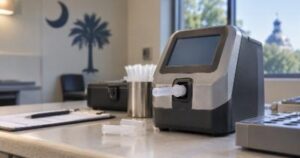
This article focuses on the evidential breath test offered after a DUI arrest under South Carolina’s implied consent law. It does not focus on a portable roadside screening device.
South Carolina law distinguishes DUI from driving with an unlawful alcohol concentration, often called DUAC. DUI focuses on whether alcohol, drugs, or a combination materially and appreciably impaired a person’s faculties to drive. DUAC applies when a person drives with an alcohol concentration of 0.08 percent or more and the statutory requirements are met.
Because a breath result can affect the criminal case and a separate driver’s license matter, the testing process deserves careful review.
More information about South Carolina breath testing:
https://duigreenville.com/breathalyzer/
Was the Breath Sample Collected Within Two Hours of the Arrest?
South Carolina Code Section 56-5-2950 requires a breath sample taken for implied-consent testing to be collected within two hours of the arrest.
If you are arrested in Greenville and a long delay occurs before the evidential breath test, the arrest time, arrival time at the testing location, start of the procedure, and sample time may matter. The written test report and breath-test-site video can be compared with the officer’s report and other timestamps to determine whether the statutory window was met.
A timing problem should be evaluated against the exact records in the case. The two-hour requirement concerns collection of the breath sample, so the documented arrest and sample times are central to that review.
Was the Operator Qualified and the Simulator Check Within Range?
South Carolina law requires the breath test to be administered by a person trained and certified by the South Carolina Criminal Justice Academy pursuant to SLED policies. A defense review can examine whether the operator’s certification was valid on the date of the test and whether the required testing sequence was followed.
Before the evidential breath test is administered, the statute also requires an 0.08 percent simulator test. The simulator result must show a reading between 0.076 percent and 0.084 percent.
Records can show whether the simulator check occurred and whether the result fell within the permitted range. An out-of-range result, missing information, or a gap between the written records and video can justify closer examination. The legal effect depends on the defect and whether it materially affected the accuracy or reliability of the result or the fairness of the testing procedure.




Was the 20-Minute Pretest Waiting Period Properly Recorded?
South Carolina’s DUI video statute requires the breath-test-site recording to include the person’s conduct during the required 20-minute pretest waiting period. The statute contains an exception when the officer submits a sworn affidavit certifying that recording the waiting period was physically impossible.
Video can show when the waiting period began, whether you remained in view, what the operator did, and whether the sequence on camera matches the written records. The waiting period is part of the testing process that South Carolina law specifically requires to be recorded.
More information about South Carolina DUI videotaping laws:
https://duigreenville.com/dui-videotaping-laws-south-carolina/
Was the Entire Breath-Test Procedure Captured on Video?
The breath-test-site recording must include the entire breath-test procedure. It must also include the person being informed that the procedure is being video recorded and that the person has the right to refuse the test, the person taking or refusing the test, and the actions of the breath-test operator while conducting the test.
A missing or incomplete recording can become a defense issue. A missing recording does not automatically require dismissal of a DUI charge. South Carolina law provides specified exceptions and permits a court to consider another valid reason for failure to produce the recording based on the totality of the circumstances.
The key questions are which part of the required procedure is missing, why it is missing, and how that absence affects the State’s ability to establish compliance with the testing requirements.
"John Bateman is my absolute go to peer in the legal field when it comes to questions about DUI. . . . He has an innate ability to convey to clients what really matters in their cases. As a fellow attorney, I highly recommend John to anyone in the SC or NC areas who are looking for... legal representation when facing a DUI charge." "John is an excellent DUI attorney. He has received the same field sobriety test training as all police officers in the State, and also the same training as the people who are the instructors of the police officer training courses on field sobriety tests. He is very passionate about DUI's and I recommend him often to people who are facing serious charges in the upstate area." "Very knowledgeable and thorough in his preparation and representation of his clients. He cares for each of his clients and works extremely hard to achieve results. I highly recommend this lawyer.""He has an innate ability to convey to clients what really matters in their cases."
M. Brock

"An excellent DUI attorney. He has received the same field sobriety test training as all police officers in the State"
P. Hammond
"He cares for each of his clients and works extremely hard to achieve results."
C. Grubbs
Were the Required Implied-Consent Warnings Given?
Before testing begins, South Carolina law requires written and verbal advisements after activation of the video recording equipment and before the testing procedure starts.
The person must be informed of several rights and consequences, including:
- The right to refuse the test or samples
- The license consequences that can follow a refusal
- The license consequences that can follow a result of 0.15 percent or more
- The right to obtain additional independent testing from a qualified person at the person’s expense
- The right to request a contested case hearing within 30 days after issuance of a notice of suspension
- The requirement to enroll in the Alcohol and Drug Safety Action Program if a hearing is not requested or the suspension is upheld
The breath-test-site video and written advisement can be compared. If required information was omitted, misstated, or provided at the wrong point in the testing process, counsel can evaluate the legal effect.
More information about South Carolina implied consent:
https://duigreenville.com/implied-consent-greenville-sc/
Was a Request for Independent Testing Properly Honored?
If you are tested, South Carolina law gives you the right to have a qualified person of your choosing conduct additional testing at your expense. You must be notified of that right.
If you request additional testing, the arresting officer must provide affirmative assistance. At a minimum, the statute requires transportation to the nearest medical facility that performs blood tests to determine alcohol concentration.
This rule carries a specific consequence. If the arresting officer fails to provide the required affirmative assistance after a request for additional testing, Section 56-5-2950 bars admission of the breath-test result in a judicial or administrative proceeding.
More information about independent testing in a DUI case:
https://duigreenville.com/independent-testing-dui-case/
Do Machine Records Show Problems Connected to the Test?
South Carolina Code Section 56-5-2954 requires SLED and each law enforcement agency with a breath-testing site to maintain detailed records of malfunctions, repairs, complaints, and other problems involving breath-testing devices at each site. The statute also requires those records to be electronically recorded and made available through SLED.
A defense lawyer may compare:
- The breath-test report
- Simulator-check information
- Device malfunction, repair, and complaint records
- Operator certification
- Breath-test-site video
- Implied-consent forms
- The arrest and testing timeline
A repair history does not automatically make a test unreliable. The question is whether a documented problem has a meaningful connection to the device, timing, or test at issue. Comparing these materials can help identify inconsistencies that deserve further review.
Refusing Field Sobriety Tests Choosing a DUI AttorneyRelated Videos
Does the Breath Result Fit the Rest of the Evidence?
A breath result should be considered with the rest of the evidence. South Carolina law permits other evidence bearing on whether a person was under the influence and permits evidence that may corroborate or question the validity of a breath-test result.
Depending on the case, that evidence can include driving behavior, incident-site video, field sobriety testing, statements, witness information, the amount of alcohol allegedly consumed, and the sequence of events surrounding the arrest.
Consider a hypothetical case in which the breath result appears inconsistent with other recorded evidence. That inconsistency does not prove that the machine was wrong. It gives the defense a reason to compare the chemical result with video, timestamps, test records, and the rest of the State’s evidence rather than treating the number as the only relevant fact.
A breath-test number is evidence, but the way the number was produced can matter just as much as the number itself.
Not Every Testing Error Automatically Excludes the Result
South Carolina Code Section 56-5-2950 provides that a failure to follow applicable SLED policies, procedures, regulations, or the statute can result in exclusion when the trial judge or hearing officer finds that the failure materially affected the accuracy or reliability of the test result or the fairness of the testing procedure.
That standard makes the connection between the defect and the test important. A challenge should identify the actual procedural or evidentiary problem and explain why it matters to accuracy, reliability, or fairness.
The independent-testing rule is different. The statute expressly states that failure to provide the required affirmative assistance upon request bars admission of the breath-test result in a judicial or administrative proceeding.
A Breath Result Can Also Affect the Driver’s License Case
South Carolina law requires an administrative driver’s license suspension when a person takes a test and has an alcohol concentration of 0.15 percent or more. This administrative matter is separate from the criminal DUI or DUAC charge.
A person generally has 30 days from issuance of the notice of suspension to request a contested case hearing before the Office of Motor Vehicle Hearings.
The scope of that hearing can include whether:
- The person was lawfully arrested or detained
- The required written and verbal advisements were provided
- The reported alcohol concentration was 0.15 percent or more
- The person who administered the test was qualified
- The test was conducted pursuant to Section 56-5-2950
- The breath-testing machine was working properly
- Evidence calls the accuracy of the breath-test result into question
Because the criminal case and administrative license matter are separate, a criminal court date does not replace the need to address the administrative hearing deadline.
What Should Be Reviewed After a South Carolina Breath Test?
A useful review starts with the records and video tied to your test. Depending on the case, the materials can include:
- Breath-test ticket or written test report
- Breath-test-site video
- Incident-site or patrol-car video
- Implied-consent advisement
- Notice of suspension
- Operator certification
- Simulator-check data
- Device malfunction, repair, and complaint records
- Police reports
- Dispatch, booking, or other timestamps relevant to the arrest and test
- Records relating to any request for independent testing
The goal is to compare the records rather than review each item in isolation. A timestamp, warning, simulator result, video gap, or machine record may take on greater significance when it conflicts with another part of the evidence.
Talk With a South Carolina DUI Defense Lawyer About Your Breath Test
If you were arrested for DUI in Greenville, Clemson, Spartanburg, or another Upstate South Carolina community, The Bateman Law Firm can review the breath test with the rest of the evidence and explain which issues may matter in your case.
The firm serves clients in Greenville, Clemson, Spartanburg, and nearby South Carolina communities. The firm’s DUI defense work includes reviewing breath-testing procedures, video evidence, license consequences, and other evidence connected to a DUI or DUAC charge.
Greenville DUI defense:
https://duigreenville.com/greenville-dui-defense-attorney/
Contact The Bateman Law Firm:
https://duigreenville.com/contact/
Call for a free consultation: (864) 406-3004
Clickable phone link:
tel:+18644063004
This article is for informational purposes only and is not legal advice. Consult an attorney about your specific situation.