
A boating under the influence case can be harder to evaluate than a roadside DUI because the setting changes how evidence is collected and interpreted. Boat movement, wakes, sun, wind, fatigue, wet surfaces, engine noise, and limited space can affect balance, coordination, communication, and officer observations. South Carolina also applies a separate BUI statute to moving motorized water devices and water devices under sail, with separate implied-consent rules and boating-privilege consequences.
The Bateman Law Firm represents people facing DUI and BUI allegations in Greenville, Clemson, Spartanburg, and nearby Upstate South Carolina communities, including matters connected with Lake Hartwell and Lake Keowee. A BUI arrest can resemble a DUI arrest on paper, but the evidence develops in a different environment. That distinction can matter when reviewing alleged impairment, chemical testing, physical exercises, video, witness accounts, and the identity of the person who was operating the vessel.
The setting matters. A BUI investigation takes place in an environment that can affect balance, communication, movement, and what an officer observes.


350+ Reviews
5.0 Star Average






Why BUI Evidence Can Be Harder to Interpret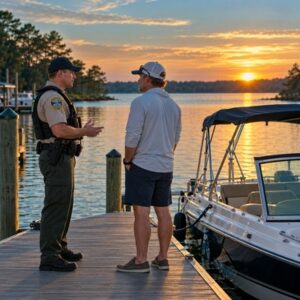
A roadside DUI investigation usually begins on pavement. An officer may observe lane position, speed, braking, signaling, or other driving before making contact. Much of the investigation may then occur on relatively stable ground.
A South Carolina BUI investigation can begin in a different way. An officer may encounter a boat because of a no-wake issue, navigation concern, equipment problem, collision, safety inspection, crowded waterway, or reported conduct.
South Carolina law makes it unlawful to operate a moving motorized water device or a water device under sail when alcohol, drugs, or a combination of substances materially and appreciably impair the person’s ability to operate.
The legal question focuses on impairment. The boating environment can make some observations harder to interpret because conditions on the water may also affect how a person looks, moves, listens, or responds.




Boat Motion Can Affect Balance and Coordination
One of the clearest differences between a BUI investigation and a roadside DUI investigation is the surface beneath your feet.
A boat can roll, pitch, drift, rock from wakes, or shift when passengers move. A dock can be wet, narrow, uneven, or moving relative to the boat. Someone who has spent hours on the water may also need time to adjust after stepping onto a stationary surface.
If an officer asks you to stand, walk, turn, balance, or follow physical instructions, the conditions surrounding the exercise can matter. Poor balance should not be viewed without context.
A defense lawyer may examine factors such as:
- Whether the boat was rocking
- Whether wakes affected stability
- Where the exercises occurred
- Whether the surface was wet, narrow, or uneven
- What footwear the person was wearing
- Whether the person had been swimming
- Whether fatigue, injury, or another physical condition affected performance
- Whether the officer documented the testing environment on video or in a report
Sun, Wind, Heat, Noise, and Fatigue Can Affect Observations
Lake Hartwell and Lake Keowee can involve hours of sun exposure, wind, glare, spray, engine noise, swimming, water sports, and other physical activity. Those conditions can leave a person tired, red-eyed, dehydrated, sunburned, or slower to respond than usual.
Some of those observations can overlap with signs that officers may associate with alcohol use.
Red or watery eyes, delayed answers, difficulty hearing instructions, and unsteady movement can have more than one possible explanation. The question in a BUI case is not simply whether an observation occurred. The question is what the observation shows when it is considered with the surrounding conditions, chemical evidence, video, witness statements, and the rest of the investigation.
"He has an innate ability to convey to clients what really matters in their cases."
"John Bateman is my absolute go to peer in the legal field when it comes to questions about DUI. . . . He has an innate ability to convey to clients what really matters in their cases. As a fellow attorney, I highly recommend John to anyone in the SC or NC areas who are looking for... legal representation when facing a DUI charge."
M. Brock

"An excellent DUI attorney. He has received the same field sobriety test training as all police officers in the State"
"John is an excellent DUI attorney. He has received the same field sobriety test training as all police officers in the State, and also the same training as the people who are the instructors of the police officer training courses on field sobriety tests. He is very passionate about DUI's and I recommend him often to people who are facing serious charges in the upstate area."
P. Hammond
"He cares for each of his clients and works extremely hard to achieve results."
"Very knowledgeable and thorough in his preparation and representation of his clients. He cares for each of his clients and works extremely hard to achieve results. I highly recommend this lawyer."
C. Grubbs
Field Sobriety Testing May Differ From a Roadside DUI Investigation
Roadside DUI investigations often involve standardized field sobriety exercises performed on a relatively stable surface. A BUI investigation may involve exercises on a dock, at a shoreline location, or after a person has stepped off a moving vessel. Marine investigations can also involve seated or modified exercises.
That distinction can affect how the evidence should be reviewed.
For more information about field sobriety testing in DUI cases, visit:
https://duigreenville.com/dui-field-sobriety-tests-in-greenville/
When a BUI case includes physical exercises, a lawyer may compare the officer’s written report with available body-camera, boat-mounted, dock, or other video. The review may include:
- The instructions the officer gave
- The location and surface used for testing
- Lighting conditions
- Footwear
- Weather
- Fatigue
- Boat movement
- Whether the officer documented conditions that could affect performance
A test result should be evaluated in the setting in which the test was performed.
Determining Who Was Operating the Boat Can Be More Complicated
In many traffic stops, an officer approaches a vehicle shortly after observing it move and can identify the person behind the wheel.
A boat can present a different factual question.
Passengers may move around the vessel. More than one person may know how to operate it. Someone may take the helm briefly while another person handles a line, assists a passenger, retrieves equipment, or prepares to dock.
Because South Carolina BUI law applies to operating a moving motorized water device or a water device under sail, the identity of the operator and the timing of the alleged operation can matter.
A lawyer may review evidence such as:
- Passenger statements
- Officer video
- Photographs
- GPS or chart-plotter information
- Boat rental records
- Marina records
- Phone videos
- The officer’s own observations
Learn more about South Carolina BUI defense here:
https://duigreenville.com/greenville-boating-under-the-influence-lawyer/
Chemical Testing Has Separate BUI Rules
South Carolina applies a separate implied-consent statute to boating cases.
A person who operates a water device is considered to have consented to chemical testing of breath, blood, or urine after an arrest for qualifying conduct involving alleged operation while under the influence.
Under South Carolina law:
Breath testing generally must be offered first.
A blood sample may be taken in qualifying circumstances when the person is physically unable to provide an acceptable breath sample.
A urine sample may be ordered when an officer has reasonable grounds to believe the person is under the influence of drugs other than alcohol.
Before testing, the person must be informed that refusal can result in a 180-day suspension or denial of boating privileges.
The person may obtain an additional test by a qualified person at the person’s expense.
The arresting officer must provide reasonable assistance with obtaining that additional test.
A chemical result can be significant evidence, but timing, testing procedure, sample handling, operator identity, and the relationship between the result and the alleged operation may still require review.
BUI Evidence May Come From More Sources Than a Typical Traffic Stop
A roadside DUI case may include dash-camera video, body-camera video, dispatch records, breath-test records, and police reports.
A BUI case can involve those materials plus evidence that is more closely connected with boating, including:
- Marine patrol or boat-mounted video
- Passenger photographs and phone videos
- Marina or dock surveillance footage
- GPS tracks or chart-plotter data
- Cell phone location information
- Boat rental records
- Fuel or marina receipts
- Weather and water-condition records
- Statements from passengers or nearby boaters
- Collision photographs
- Vessel-damage records
Some evidence can be lost or overwritten. Surveillance systems may retain footage for a limited period. GPS information may later be deleted. Witness memories can become less precise.
Evidence preservation can play a major role in determining what information remains available for review.
Learn more about discovery in a DUI case here:
https://duigreenville.com/importance-discovery-in-a-dui-case/
BUI Penalties Are Different From DUI Penalties
A South Carolina BUI charge is governed by a separate part of state law.
For a first BUI conviction under South Carolina Code Section 50-21-112, the statute provides for:
- A $200 fine or imprisonment for at least 48 hours and no more than 30 days
- The possibility of 48 hours of public service instead of the 48-hour minimum term of imprisonment
- A six-month prohibition on operating a water device in South Carolina
- Completion of a boating safety education program approved by the South Carolina Department of Natural Resources
- Enrollment in and successful completion of an Alcohol and Drug Safety Action Program before boating privileges can be reinstated after a qualifying suspension
- Penalties increase for later convictions.
Refusing qualifying chemical testing can lead to a separate 180-day suspension or denial of boating privileges.
Cases involving property damage, injury, great bodily injury, or death are addressed under separate statutory provisions and can carry more serious consequences. The exact charge and possible penalties depend on the facts, prior history, and statute alleged.
Why a Careful BUI Case Evaluation Matters
A BUI case may require a lawyer to separate evidence of impairment from conditions that are common on or around a boat.
A case review may include questions such as:
- Why did law enforcement make contact with the vessel?
- Who was operating the vessel?
- Was the vessel moving?
- Where did any physical exercises occur?
- What does the available video show?
- Were the testing conditions stable?
- Were chemical-testing procedures followed?
- What was the timing between alleged operation and testing?
- Do witness statements support or conflict with the officer’s account?
- Is there GPS, marina, rental, or surveillance evidence that should be preserved?
The Bateman Law Firm reviews the investigation and the evidence rather than treating an arrest itself as proof of guilt.
Attorney John C. Bateman is a former Army JAG prosecutor and has training related to standardized field sobriety testing. That background can be relevant when reviewing officer procedures, coordination testing, video, and the State’s theory of impairment.
Learn more about John C. Bateman here:
https://duigreenville.com/john-bateman/
What to Do After a South Carolina BUI Arrest
Preserving information early can make later review more accurate.
Write down details while they are still fresh, including:
- Where the encounter occurred
- Who was on the boat
- Who was operating
- What the water conditions were
- What the weather was like
- What the officer said
- Where any exercises were performed
- Whether anyone recorded the encounter
- Whether the boat had GPS or chart-plotter data
- Whether the vessel was rented
- Whether marina or dock cameras may have recorded events
Save photographs, videos, GPS information, messages, receipts, citations, bond papers, testing documents, and suspension notices.
Ask passengers or witnesses to preserve their own photographs, video, messages, or location records rather than assuming copies will remain available.
Do not assume that every deadline is tied to the first court date. A boating-privilege suspension, evidence-preservation issue, or another proceeding may follow a different timeline.
Talk With a South Carolina BUI Defense Lawyer
A BUI case can be harder to evaluate than a roadside DUI because the boating environment can affect both the investigation and the evidence used to describe impairment.
A careful review can account for the vessel, water conditions, testing location, identity of the operator, chemical-test procedures, video, witnesses, and the timeline connecting the alleged operation to the evidence.
The Bateman Law Firm represents people facing DUI and BUI allegations in Greenville, Clemson, Spartanburg, and nearby Upstate South Carolina communities.
Contact The Bateman Law Firm online:
https://duigreenville.com/contact/
This article is for informational purposes only and is not legal advice. Consult an attorney about your specific situation.