
Yes. You can be arrested for DUI in South Carolina after taking a legal prescription drug if an officer has probable cause to believe the medication impaired your ability to drive. A valid prescription may explain why a drug was in your system, but it does not automatically prevent an arrest or defeat a DUI charge.
South Carolina Code Section 56-5-2930 applies when alcohol, another drug, or a combination of substances materially and appreciably impairs your faculties to drive. The legal issue is impairment, not simply whether you had permission to possess or take the medication.
The Bateman Law Firm represents drivers facing DUI allegations in Greenville, Clemson, Spartanburg, and nearby Upstate South Carolina communities. A defense review may include police video, roadside observations, chemical testing, prescription records, medical conditions, and the timeline surrounding the arrest.
A lawful prescription can explain why a medication was present, but the central DUI question is whether it materially and appreciably impaired your ability to drive.
350+ Reviews

5.0 Star Average





South Carolina DUI Law Covers Prescription Medication 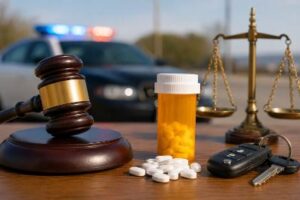
Many people associate DUI with alcohol or illegal drugs. South Carolina law is broader. Section 56-5-2930 addresses driving under the influence of alcohol, drugs, or a combination of substances when the impairment materially and appreciably affects a person’s faculties to drive.
A medication can be lawfully prescribed, lawfully possessed, and taken according to medical directions while still becoming part of a DUI investigation. The State must still prove the required elements of the offense.
A prescription bottle with your name may help explain lawful possession and use. It does not, by itself, answer whether the medication affected your alertness, coordination, judgment, reaction time, or ability to control a vehicle while you were driving.
For more information about drug-related DUI allegations in South Carolina, visit:
https://duigreenville.com/dui-and-drug-use-in-south-carolina-legal-implications/




Which Prescription Drugs Can Lead to a DUI Investigation?
Any prescription medication that can affect safe driving may become relevant in a DUI investigation. The effects can vary based on dosage, timing, tolerance, medical condition, recent dosage changes, and whether the medication was combined with another substance.
Prescription medications that may draw police attention include:
- Opioid pain medications
- Benzodiazepines used for anxiety, seizures, or related conditions
- Sleep medications
- Muscle relaxants
- Certain antidepressants or antipsychotic medications
- Prescription stimulants
- Medications that may cause drowsiness, dizziness, confusion, or slowed reaction time
- Combinations of prescription medication, over-the-counter medication, or alcohol
The same medication may affect two people differently. A medication that did not cause noticeable side effects in the past may affect you differently after a dosage change, illness, lack of sleep, or interaction with another medication.
What Police Look for Before a Prescription Drug DUI Arrest
A prescription drug DUI investigation may begin after a traffic stop, a collision, or another lawful encounter. An officer may report lane drifting, unusual speed, delayed braking, a wide turn, failure to respond to a traffic signal, or another driving pattern.
After speaking with you, the officer may focus on your speech, balance, eye appearance, coordination, ability to follow instructions, and answers to questions.
Police may also consider:
- Statements about medication, dosage, and timing
- Prescription containers found in the vehicle
- Performance on roadside sobriety exercises
- Body-camera or dash-camera footage
- Information from passengers or witnesses
- Evidence from a collision scene
- Blood or urine test results
No single observation necessarily proves that prescription medication caused impairment. Tiredness, anxiety, pain, injury, illness, and other medical issues can affect how a person appears during a traffic stop. The surrounding facts matter.
"John Bateman is my absolute go to peer in the legal field when it comes to questions about DUI. . . . He has an innate ability to convey to clients what really matters in their cases. As a fellow attorney, I highly recommend John to anyone in the SC or NC areas who are looking for... legal representation when facing a DUI charge." "John is an excellent DUI attorney. He has received the same field sobriety test training as all police officers in the State, and also the same training as the people who are the instructors of the police officer training courses on field sobriety tests. He is very passionate about DUI's and I recommend him often to people who are facing serious charges in the upstate area." "Very knowledgeable and thorough in his preparation and representation of his clients. He cares for each of his clients and works extremely hard to achieve results. I highly recommend this lawyer.""He has an innate ability to convey to clients what really matters in their cases."
M. Brock

"An excellent DUI attorney. He has received the same field sobriety test training as all police officers in the State"
P. Hammond
"He cares for each of his clients and works extremely hard to achieve results."
C. Grubbs
Can You Be Arrested Even If You Took the Medication Exactly as Prescribed?
Yes. Taking medication exactly as prescribed does not automatically prevent a DUI arrest. Police may still make an arrest if they believe there is probable cause to conclude that the medication impaired your ability to drive.
Lawful use and impairment are separate questions. Evidence that you followed your prescription instructions may help explain the circumstances, but the State may still rely on driving behavior, officer observations, testing evidence, video, or other facts to argue that impairment occurred.
An Arrest Is Not the Same as a Conviction
An arrest is not a conviction. Police do not need to prove a DUI charge beyond a reasonable doubt before making an arrest. The arrest decision is based on probable cause. A prosecutor later carries the burden of proving the charge in court.
That distinction can matter in prescription drug cases. The State may have evidence that a medication was present without having equally strong evidence that the medication caused material and appreciable impairment.
A positive toxicology result can be relevant, but it should be reviewed with the rest of the evidence. The timing of the dose, timing of the sample, reported concentration, laboratory method, medical history, driving evidence, officer observations, and available video may all affect the analysis.
How Blood and Urine Testing May Affect a Prescription Drug DUI Case
Drug-related DUI cases may involve blood or urine testing under South Carolina law. South Carolina implied consent provisions address testing for alcohol, drugs, or a combination of substances, depending on the circumstances and the testing process used.
A laboratory report may identify a prescription medication, a metabolite, or more than one substance. The presence of a drug does not always answer how much the substance affected a person at the time of driving.
Prescription medications are not all evaluated through one numerical threshold that functions like the alcohol concentration used in a DUAC case. That can make the surrounding evidence especially relevant.
A DUI defense lawyer may review:
- When the sample was collected
- How the sample was labeled
- Who handled the sample
- How the sample was stored
- Which testing method was used
- What concentration was reported
- Whether the result matches the driving evidence and police observations
For more information about blood testing in DUI cases, visit:
https://duigreenville.com/the-role-of-blood-tests-in-dui-cases/
Refusing Field Sobriety Tests Choosing a DUI AttorneyRelated Videos
Can a Medical Condition Explain Signs That Police Attribute to Drug Impairment?
Yes, in some cases. Medical conditions can affect balance, speech, coordination, eye movement, gait, or the ability to perform physical tasks on the roadside. Fatigue, pain, anxiety, injuries, neurological conditions, and other health issues can also affect how a person appears during a stressful traffic stop.
A medical explanation does not automatically defeat a DUI charge. It may provide another explanation for signs that an officer attributed to medication or drug impairment.
Records that may become relevant include:
- Medical records
- Prescription instructions
- Pharmacy records
- Treatment history
- Dosage information
- Records showing when medication was prescribed or changed
You should not stop taking prescribed medication solely because of a DUI arrest without speaking with the medical professional who prescribed it.
What Defenses May Apply in a Prescription Medication DUI Case?
The available defense depends on the facts. A lawyer may examine several issues instead of relying on one argument.
Questions may include:
- Did the officer have a lawful basis for the traffic stop or detention?
- Did the officer have probable cause to make the arrest?
- Does the video support the officer’s written description of impairment?
- Were roadside sobriety exercises explained and administered properly?
- Could a medical condition, injury, anxiety, fatigue, or pain explain the observations?
- Does the toxicology evidence show impairment, or only the presence of medication?
- Was the sample collected, handled, stored, and tested properly?
- Do the dose timing and laboratory findings fit the State’s theory?
- Were statements about medication obtained and reported accurately?
- Is there evidence that another factor better explains the driving or roadside observations?
South Carolina DUI cases can turn on details that are difficult to evaluate from the arrest report alone.
What Should You Do After a Prescription Drug DUI Arrest?
After a prescription drug DUI arrest, preserve records that may help explain the timeline and circumstances of the arrest.
Keep:
- Your prescription bottle
- Pharmacy paperwork
- Medication instructions
- Arrest documents
- Bond paperwork
- Testing paperwork
- Receipts
- Messages
- Location records
- Witness names and contact information
Write down when you took the medication, the dosage, what you ate or drank, where you were driving, why the officer stopped you, what the officer said, and which roadside exercises you performed.
Avoid posting details about the arrest on social media. Do not alter records or discard medication packaging that may later help explain what you were taking.
For more information about the days after a DUI arrest, visit:
https://duigreenville.com/after-dui-arrest-in-greenville-sc/
Talk With a Greenville DUI Defense Lawyer About a Prescription Drug Arrest
If you were arrested after taking prescription medication, the legal question is not simply whether the medication was lawful. The State must still prove the required elements of the DUI charge, including material and appreciable impairment.
The Bateman Law Firm focuses on DUI defense in Greenville and throughout Upstate South Carolina. Attorney John C. Bateman is a former Army JAG prosecutor and has completed National Highway Traffic Safety Administration DUI Detection and Field Sobriety Testing training, Advanced Roadside Impaired Driving Enforcement training, and the NHTSA DUI Detection and Field Sobriety Testing Instructor’s Course.
Learn more about John C. Bateman:
https://duigreenville.com/john-bateman/
Learn more about the firm’s DUI defense practice:
https://duigreenville.com/greenville-dui-defense-attorney/
A case review can examine the traffic stop, police video, roadside testing, chemical testing, medical context, prescription history, and the timeline surrounding the medication.
Call (864) 406-3004 or visit:
https://duigreenville.com/contact/
The Bateman Law Firm serves Greenville, Clemson, Spartanburg, and nearby Upstate South Carolina communities.
This article is for informational purposes only and is not legal advice. Consult an attorney about your specific situation.